

Coffee Subscription vs Grocery Store: 2026 Guide
Table of Contents
- Coffee Subscription vs Grocery Store: The Core Difference
- Understanding Coffee Roast Date Importance
- Freshness and Shelf Life: What Actually Matters
- Coffee Subscription Cost Comparison: Breaking Down the Numbers
- How to Store Coffee Beans for Maximum Freshness
- Quality, Flavor Profile, and Supply Chain Transparency
- Convenience, Automation, and Inventory Management
- Environmental Impact and Packaging Waste
- Frequently Asked Questions
Last Updated: October 2, 2026
Coffee Subscription vs Grocery Store: The Core Difference
When you open a bag of grocery store coffee, notice what's missing. The aroma is faint. Muted. A shadow of what coffee should smell like. That's staleness, and it's the defining difference between coffee subscription vs grocery store beans. Subscription services roast to order and ship within days. Grocery store coffee sits on shelves for weeks or months before reaching your kitchen, losing the vibrant complexity that roasters worked to create.
The roast date on most commercial coffee is further back than most people realize. By the time those beans reach your mug, the flavor has already faded. A coffee subscription eliminates that problem by delivering beans roasted after your order arrives, not before it ships.
The choice between these two channels isn't just about freshness, though. It's about cost per cup, convenience, flavor profiles, and what you're willing to prioritize in your daily ritual. Below, we'll break down exactly where each wins and where it falls short.
Understanding Coffee Roast Date Importance
The roast date is the single most important number on a coffee bag. It tells you how long ago the beans were roasted, which directly determines what you'll taste in your cup.
Fresh-roasted beans reach peak flavor between 3 and 14 days after roasting. After 14 days, the beans begin a slow decline.
Grocery store coffee rarely shows a roast date at all. When it does, that date is often 2-3 months old. The beans have already passed their peak window. What you're buying is convenience, not quality. A coffee subscription, by contrast, roasts after your order and ships immediately, meaning the beans arrive at peak freshness.
Freshness and Shelf Life: What Actually Matters
How Long Coffee Stays Fresh After Roasting
Whole bean coffee stays fresh longest when stored properly. Most beans reach peak flavor between 3 and 14 days post-roast. After that window, the coffee doesn't go bad, it just tastes increasingly flat and stale.
Storage matters enormously. Coffee stored in an airtight container away from light and heat stays fresher longer than coffee left open on a shelf.
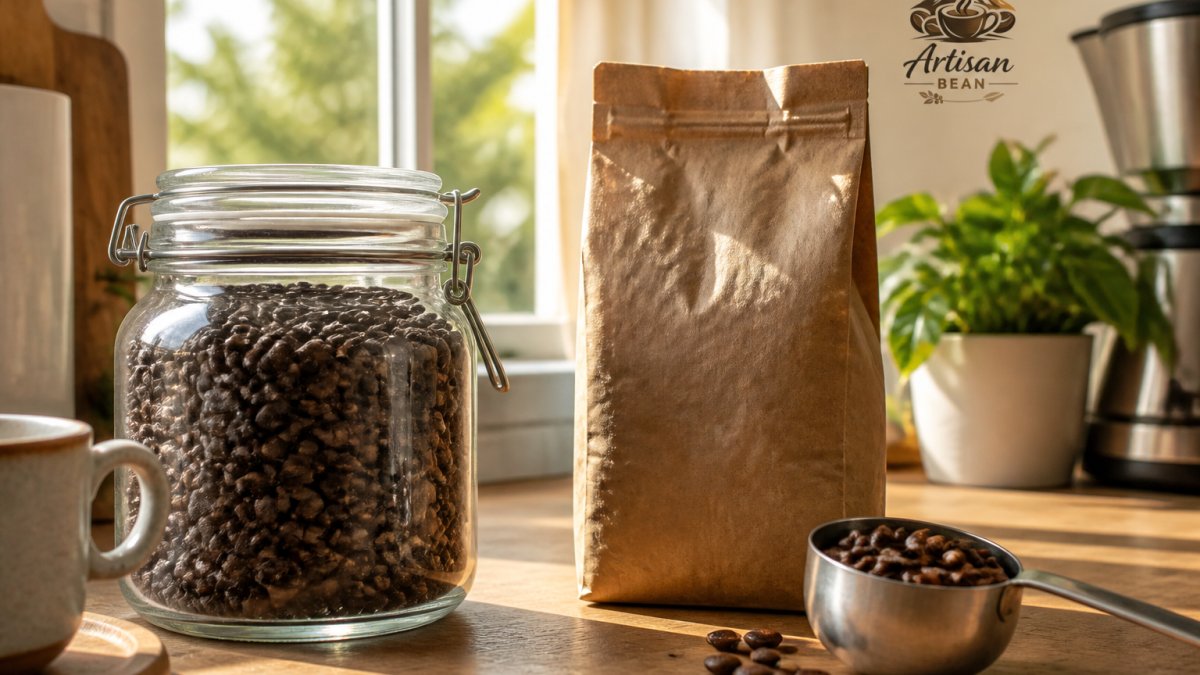
Grocery store coffee typically sits in warehouses, distribution centers, and store shelves for weeks or months before you buy it. By then, it's already past peak freshness. A coffee subscription arrives 5-10 days post-roast, putting it squarely in the ideal flavor window.
Coffee Subscription Cost Comparison: Breaking Down the Numbers
Cost Per Cup Analysis
The price difference between subscription and grocery store coffee feels significant upfront. Subscription services usually charge $20 to $30 per pound, sometimes more for single-origin or specialty lots.
But cost per cup tells a different story. A pound of coffee yields roughly 16 cups, depending on brew strength and method. A subscription service at $25 per pound costs about $1.56 per cup.
The question isn't whether subscription coffee costs more. It does. The question is whether the flavor difference justifies the premium.
Artisan Bean's subscription options start at $25 per month for the Trip Around The World Coffee Club, which delivers one pound of fresh-roasted beans monthly. The 12 Pack Single Serve Coffee Capsules cost $19.99 and offer convenience for quick mornings, while the Best Sellers Sample Pack at $27.99 lets you explore multiple roast profiles and origins before committing to a subscription.

| Option | Price | Per-Cup Cost | Freshness | Convenience |
|---|---|---|---|---|
| Grocery Store (standard) | $12/lb | ~$0.75 | 4-8 weeks old | Immediate |
| Specialty Grocery Store | $22/lb | ~$1.38 | 3-6 weeks old | Immediate |
| Coffee Subscription | $25/month | ~$1.56 | 5-10 days old | Delivery wait |
| Artisan Bean Club | $25/month | ~$1.56 | Roasted to order | Fast shipping |
How to Store Coffee Beans for Maximum Freshness
Proper storage extends the life of your beans and protects the flavor you paid for. The enemy of fresh coffee is oxygen, light, heat, and moisture.
Store whole beans in an airtight container. Glass jars with rubber seals work well. Ceramic containers with tight-fitting lids are excellent. Avoid clear containers that expose beans to light. Keep the container in a cool, dark place, away from direct sunlight and heat sources like stoves or windows.
Do not refrigerate or freeze coffee unless you're storing it for months and can keep it completely sealed.
Buy only what you'll use within 2-3 weeks if possible. Smaller, more frequent purchases preserve flavor better than buying a month's supply at once.
Quality, Flavor Profile, and Supply Chain Transparency
Specialty Coffee vs Commercial Commodity Beans
The difference between specialty coffee and commercial commodity beans starts in the soil and ends in your cup.
Specialty coffee comes from specific origins, grown at particular altitudes, harvested by hand, and processed with care. They taste complex, you notice the origin characteristics, the roast profile, the processing method.
Trip Around The World Coffee Club →
Commercial commodity coffee is sourced from multiple origins, blended for consistency, and processed efficiently at scale. It's reliable but not distinctive. Most grocery store coffee falls into this category.
Specialty coffee costs more because the supply chain is more selective. Farmers are paid higher prices for higher-quality beans. Processing is more careful.
Artisan Bean sources from partnered sustainable farms and roasts in small batches. The Best Sellers Sample Pack includes single-origin coffees from Peru (with tasting notes of salted caramel and citrus), Mexico (chocolate, cinnamon, green apple), and Bali (dark chocolate, molasses, brown sugar). Each origin tastes distinct because the beans are treated as individuals, not as interchangeable commodity.

Direct Trade and Sustainable Sourcing
Direct trade means roasters buy directly from farmers, cutting out middlemen.
In commodity supply chains, coffee passes through exporters, importers, and distributors before reaching the roaster. Direct trade relationships eliminate these layers. Roasters know the farmers. Farmers know the roaster will return year after year.
Sustainability in coffee means protecting the land where it grows. This includes shade-grown practices that preserve forest ecosystems, water management that doesn't deplete local sources, and labor practices that don't exploit workers.
Artisan Bean partners directly with sustainable farms and emphasizes freshness. When coffee is roasted to order, there's no excess inventory sitting in warehouses. No stale beans discarded. No packaging stored for months waiting to ship.
Convenience, Automation, and Inventory Management
Grocery store coffee wins on immediate convenience. You walk in, grab a bag, walk out. No waiting. No planning ahead.
A coffee subscription requires you to think about your supply. You choose a delivery frequency, weekly, bi-weekly, monthly. You commit to an order before the coffee is roasted. If you travel or change your routine, you need to pause or adjust your subscription.
But subscription convenience works differently. You never run out if you set it up right. The coffee arrives when you need it. You don't spend time shopping for coffee. You don't make decisions every week about which bag to buy. You don't end up with stale beans because you overbought.
For remote professionals and busy executives, this automation is valuable. Your coffee ritual doesn't require effort, the beans simply arrive.
Environmental Impact and Packaging Waste
Both channels have environmental costs, but they differ significantly.
Grocery store coffee requires packaging that survives weeks in warehouses and on shelves. Most bags are multi-layer materials combining paper, plastic, and aluminum foil for protection and shelf appeal. Once you use the coffee, these bags are difficult to recycle because of the mixed materials.
Frequently Asked Questions
Is it worth getting a coffee subscription instead of buying from the grocery store?
Yes, if you prioritize freshness and flavor complexity. Subscription services roast beans to order and ship immediately, delivering coffee at peak freshness. Grocery store coffee is often weeks or months old by purchase time, losing vibrant aroma and nuanced flavor notes. For casual drinkers who value convenience and price over flavor, grocery store options remain practical. For those seeking origin-specific tasting profiles and mindful brewing rituals, subscriptions deliver measurable quality gains.
How does coffee roast date importance affect which option you should choose?
Roast date is the single most reliable indicator of coffee quality because beans lose volatile compounds and oxidize over time. Subscription services guarantee recent roast dates, while grocery store beans rarely display clear roast dates or show dates weeks or months old. Checking the roast date reveals why subscription coffee tastes noticeably brighter and more complex. If a grocery store bag shows no roast date, assume the beans are stale.
What is the best way to store coffee beans after delivery to maintain freshness?
Store whole beans in an airtight container away from heat, light, and moisture. A sealed glass jar or coffee canister in a cool, dark cupboard works best. Keep beans away from direct sunlight and stovetops.
How much does a coffee subscription actually cost compared to grocery store coffee?
Subscription services like Artisan Bean's Trip Around The World Coffee Club cost $25 per month for 1lb of specialty-grade, freshly roasted beans. That's approximately $1.56 per ounce or $25 per pound. On a cost-per-cup basis, subscription coffee (using 15-20g per cup) averages $0.40-0.55 per cup. The premium reflects roasting to order and guaranteed freshness rather than warehouse inventory aging.
Can you really taste the difference between fresh-roasted subscription coffee and grocery store coffee?
Yes, noticeably. Fresh-roasted beans deliver vibrant aroma, complex flavor notes specific to their origin, and cleaner acidity. Grocery store coffee tastes flat, muted, and one-dimensional because volatile compounds that carry flavor and aroma dissipate over weeks of storage. If you grind beans immediately before brewing, the difference becomes obvious within the first sip.