

Is Expensive Coffee Actually Better? The Taste Test Truth
Table of Contents
- The Price Gap: What You're Actually Paying For
- Cheap vs Expensive Coffee Taste: The Real Differences
- How to Tell If Coffee Beans Are Fresh
- Why Is Specialty Coffee Expensive
- Bean Quality, Origin, and Flavor Notes: What Sets Them Apart
- Coffee Taste Test: A Framework for Fair Comparison
- Cost Per Cup and the Value Equation
- Is Expensive Coffee Actually Better for You?
- Frequently Asked Questions
Last Updated: October 9, 2026
The Price Gap: What You're Actually Paying For
Compare a supermarket bag to specialty coffee online and the price gap feels jarring, grocery-store beans can cost half as much. But you're not just paying for beans. You're paying for freshness, traceability, and the supply chain that keeps them vibrant instead of stale.
The gap exists because specialty coffee carries real costs mass-market coffee hides: direct sourcing from farms, grower relationships, small-batch roasting, and immediate shipping. Grocery-store coffee sits in warehouses and on shelves for weeks or months, so by the time it reaches your kitchen the aroma has faded and the complex notes have dulled.
At Artisan Bean, we've seen it firsthand: the difference between coffee roasted last week and six months ago is dramatic. Freshness isn't a luxury feature, it's the foundation of whether expensive coffee actually tastes better. Without it, even premium beans taste muted.
Cheap vs Expensive Coffee Taste: The Real Differences
The taste difference between cheap and expensive coffee comes down to three factors: freshness, bean quality, and processing method, all of which directly affect your cup.
Fresh coffee is bright and complex: crisp acids, pronounced sweetness, an aroma that fills the room. Stale coffee tastes flat and one-dimensional, its flavor notes replaced by a generic bitterness. That's chemistry, not opinion, volatile compounds degrade over time, and once gone, no brewing skill brings them back.
Bean quality matters because not all coffee cherries are equal. Higher-altitude beans develop more complex sugars and acids, and single-origin coffees carry distinct regional profiles, a Colombia grown at 1,300 meters tastes different from one at 1,600.
Processing method, how the bean is dried and fermented, shapes taste too. Natural process coffees (dried in their fruit) taste fruity and sweet; washed coffees taste cleaner and more acidic. Neither is better, just different. Mass-market coffee rarely tells you which process was used; specialty roasters do, because it matters.
How to Tell If Coffee Beans Are Fresh
Freshness is the easiest quality marker to verify yourself, and where expensive coffee wins most consistently:
Look at the roast date. The single most important indicator. Coffee is freshest 5 to 30 days after roasting; by 60 days you're tasting a noticeably duller cup. Grocery-store coffee often has roast dates 3-6 months old. No roast date? Assume it's old.
Open the bag and smell it. Fresh coffee has a strong, complex aroma, chocolate, fruit, nuts, or floral notes depending on origin. Stale coffee smells faint and flat. Aroma fades first, so if you can barely smell anything, the coffee has been sitting for months.
Check the packaging. Specialty roasters use one-way valves that let CO2 escape without letting oxygen in, preserving freshness longer. Cheap coffee often uses plain foil bags with no valve, so it degrades faster once opened.
Brew a small amount and taste it. Fresh coffee tastes bright and clean, with distinct sweetness, acidity, and body. Stale coffee tastes flat, with a bitter or cardboard-like aftertaste. It's the most reliable test, though you need both fresh and stale coffee side by side to grasp the difference.
Why Is Specialty Coffee Expensive
Specialty coffee costs more because of how it's grown, sourced, and roasted. Here's whether that price difference is justified.
Direct relationships with farms. Specialty roasters often buy directly from growers rather than commodity brokers, paying prices that reflect the quality and care involved.
Small-batch roasting. Mass-market coffee roasts in huge batches to minimize per-unit cost; specialty roasters roast smaller quantities for quality control and freshness.
Immediate shipping. Specialty roasters ship within days of roasting, which requires efficient logistics and often faster, pricier shipping. Grocery-store coffee sits in distribution centers for weeks, cheaper, but it destroys freshness.
Traceability and transparency. Specialty roasters track each batch's origin, altitude, and processing. Maintaining that information costs money, and it rules out mystery beans or blending old stock with new to manage inventory.
The price reflects real operational differences: not marketing or a fancy label, but a fundamentally different product with a shorter supply chain and fresher beans.
Bean Quality, Origin, and Flavor Notes: What Sets Them Apart
Coffee flavor is tied directly to where beans are grown and how they're processed, where expensive coffee reveals its complexity.
Origin matters because climate, altitude, and soil create distinct flavor profiles. Ethiopian coffees, grown at high altitude with natural processing, tend fruity and floral; Brazilian coffees, grown lower with pulped-natural processing, tend chocolatey and nutty.
Single-origin coffees preserve these differences. A single-origin coffee showcases one farm or region's distinct character; blends mix origins for consistency. Blends aren't worse, just different, but they mask the unique qualities that make specialty coffee interesting.
Bean quality is graded by defect count and size. Specialty-grade coffee has fewer defects and more uniform size, meaning more consistent roasting and fewer off-flavors.
Altitude affects flavor intensity. Higher-altitude beans grow slower and develop more complex sugars and acids, a coffee grown at 1,700 meters tastes more complex than one at 800.
Comparing specialty to grocery-store coffee often means comparing a single-origin, high-altitude, carefully processed bean to a low-grade blend. The flavor difference is real and substantial.
Coffee Taste Test: A Framework for Fair Comparison
To determine whether expensive coffee tastes better, you need a fair comparison:
Single Origin Favorites Sample Pack →
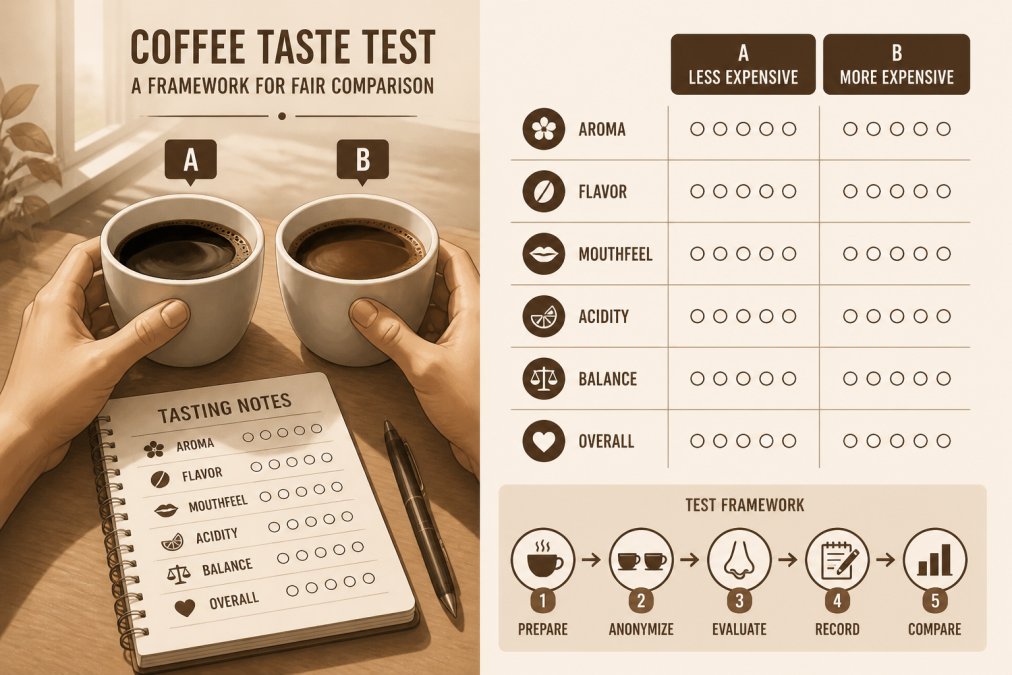
Use the same brewing method for both coffees. Espresso, pour-over, and French press all extract differently. Pick one and stick with it, pour-over is easiest to repeat.
Brew them at the same time. Temperature and freshness matter. Brew both, let them cool to the same temperature, and taste within minutes of each other, not one in the morning and one cold in the afternoon.
Taste blind if possible. Have someone label the cups A and B without telling you which is which. Your brain expects expensive coffee to taste better, and that expectation influences what you taste.
Use a tasting framework. Score both on aroma, acidity, body, flavor notes, and aftertaste, and write it down. This forces you to notice actual differences, more sweetness, a cleaner finish, instead of a gut "this one tastes better."
Compare cost per cup, not bag price. If specialty coffee costs twice as much per pound and you use the same amount per cup, you're paying twice as much per cup.
Cost Per Cup and the Value Equation
The real question isn't whether expensive coffee tastes better, it's whether it's worth the price for you.
A standard bag of specialty coffee from Artisan Bean costs around $22.99 and makes roughly 15-18 cups, about $1.30 to $1.50 per cup.
Whether that's worth it depends on how much you value the taste difference and how often you drink coffee.
But freshness is non-negotiable for taste, and you can't get fresh coffee at grocery-store prices, small-batch roasting, fast shipping, and farm relationships all cost money.
Many people find the taste difference justifies the cost. Fresh coffee is noticeably brighter, more complex, less bitter; once you've tasted it, grocery-store coffee tastes flat by comparison.
Others find the price isn't worth it for their use case. If you drink coffee quickly without savoring it, or add cream and sugar, the flavor nuances disappear anyway.
The value equation is personal. But the freshness difference is objective, specialty coffee is fresher, and fresher coffee tastes better. The price reflects that real difference.
Is Expensive Coffee Actually Better for You?
This has two answers: one about taste, one about health.
On taste: Yes, expensive coffee is usually better if it's fresh, the difference comes from freshness, bean quality, and origin.
On health: Coffee is coffee. Caffeine and antioxidants are present in both cheap and expensive coffee, so fresh specialty coffee offers no more health benefits than stale grocery-store coffee.
Where expensive coffee wins is the ritual. Fresh coffee smells better, tastes better, and creates a moment worth your attention, not a clinical health benefit, but a quality-of-life one.
For those who care about sourcing and ethics, specialty coffee often comes with direct farm relationships and fair-trade practices. If you want to know your purchase supports farmers fairly, specialty coffee usually offers that transparency; mass-market coffee rarely does.
The practical answer: if you drink coffee daily and have the budget, fresh specialty coffee is worth trying. If you enjoy the taste difference, the value equation favors it; if not, grocery-store coffee is perfectly fine.
The difference between a good cup of coffee and a mediocre one comes down to freshness more than anything else. Our single-origin coffees like Brazil Santos showcase distinct flavor profiles with cocoa notes and elegant smoothness, while our Single Origin Favorites Sample Pack lets you explore six different origins and processing methods.


| Coffee Type | Roast Date Typical | Flavor Profile | Cost Per Cup |
|---|---|---|---|
| Grocery Store | 3-6 months old | Flat, muted | $0.45-0.55 |
| Specialty (Fresh) | 1-2 weeks old | Bright, complex | $1.30-1.50 |
| Artisan Bean Single Origin | Roasted to order | Origin-specific notes | $1.30-1.50 |
| Artisan Bean Sample Pack | Roasted to order | Six distinct origins | $1.55 per 2oz |
According to the Specialty Coffee Association, specialty coffee is defined by a combination of freshness, traceability, and sensory quality, standards that mass-market coffee rarely meets. Research from coffee industry analysis on bean degradation shows that volatile flavor compounds begin degrading within 30 days of roasting, which explains why roast date is the single best predictor of taste quality. The National Coffee Association guide to coffee freshness recommends consuming coffee within 30 days of roasting for optimal flavor, a standard that specialty roasters meet and grocery-store coffee does not.
Frequently Asked Questions
Can most people actually taste the difference between cheap and expensive coffee?
Yes, most people can detect differences when comparing side by side, but perception varies. Freshness is the biggest factor, stale supermarket coffee tastes flat and muted compared to fresh-roasted beans. You'll notice acidity, sweetness, and flavor notes more clearly in specialty coffee. However, sensitivity depends on your palate and brewing method. A poor brew can mask quality beans, while excellent technique can improve cheaper coffee.
How can you tell if coffee beans are fresh?
Check the roast date on the bag, beans are best within 2-4 weeks of roasting. Fresh beans have a vibrant aroma when you open the bag; stale coffee smells flat and dull. Look for a glossy sheen on the beans (from natural oils) and avoid beans that look dusty or discolored. When you grind fresh beans, the smell should be rich and complex. Supermarket coffee often lacks a visible roast date, which is a red flag for staleness.
Why is specialty coffee more expensive than supermarket coffee?
Specialty coffee costs more because of traceability, freshness, and quality control. Single-origin beans are sourced directly from specific farms, often paying higher prices for ethical sourcing and sustainable practices. Specialty roasters roast in small batches to order and ship immediately, eliminating warehouse storage that degrades flavor. Supermarket coffee sits on shelves for months, losing complexity. You're also paying for the roaster's expertise, equipment, and the guarantee that beans reach you at peak freshness.
Does expensive coffee have more caffeine than cheap coffee?
Caffeine content is similar across coffee types, it depends on the bean variety and brew method, not price. A cup of expensive specialty coffee has roughly the same caffeine as supermarket coffee. The difference is flavor, freshness, and complexity, not caffeine strength. If you're seeking more caffeine, brewing method (espresso vs pour-over) matters more than which beans you buy.
Is specialty coffee worth the price if I just need a caffeine fix?
If you drink coffee daily purely for caffeine, expensive specialty coffee may feel wasteful. However, many casual drinkers are surprised by the difference fresh beans make, even when you're not paying close attention. Fresh coffee tastes noticeably better without requiring extra effort. The cost difference per cup is smaller than you'd think: a $22.99 bag of specialty coffee (like our Brazil Santos) yields roughly 20 cups, about $1.15 per cup versus $0.50 for supermarket coffee. Whether that 65-cent difference matters depends on your budget and how much you value your morning ritual.