

Press Coffee Alternatives for Fresh Beans
Table of Contents
- Why Fresh Beans Change the Brewing Equation
- Press Coffee Alternatives for Fresh Beans: A Comparison Table
- How to Brew Coffee Without a Coffee Maker
- AeroPress vs French Press: Which Suits Fresh Beans Best?
- Coffee Grind Size for Brewing Methods: A Practical Chart
- How to Store Fresh Coffee Beans So Flavor Lasts
- Matching Artisan Bean Single Origins to Each Method
- Conclusion: Pick the Method That Fits Your Morning
- Frequently Asked Questions
Last Updated: October 8, 2026
Why Fresh Beans Change the Brewing Equation
Fresh beans are not a flavour upgrade you can bolt onto any brewing method. They are a variable that changes which method you should choose in the first place.
Coffee begins losing aromatic compounds within days of roasting. The volatile oils that carry fruit, cocoa and caramel notes oxidise steadily, and the carbon dioxide trapped inside the bean during roasting escapes over the first week or two. That gas matters more than most people realise. A very fresh bean releases CO2 aggressively when it meets hot water, which is why a bag roasted three days ago can behave completely differently in the same brewer as one roasted three weeks ago.
At Artisan Bean, we roast in micro-batches to order and ship immediately after, because the window between roast and cup is the single biggest lever on flavour. Beans that arrive days off the roaster taste brighter and more layered than anything that has sat on a shelf.
So the question is not "which press is best" but "which method suits a bean this fresh." The answer depends on how much control the brewer gives you over time, temperature and agitation. That is what this comparison covers.
Press Coffee Alternatives for Fresh Beans: A Comparison Table
The best press coffee alternatives for fresh beans are pour-over, AeroPress, moka pot, cold brew and the humble saucepan method. Each handles a freshly roasted bean differently, and the trade-offs come down to control, body and cleanup.
| Method | Grind Size | Brew Time | Body | Best For |
|---|---|---|---|---|
| Pour-over | Medium-fine | 3-4 min | Light, clean | Highlighting single-origin acidity |
| AeroPress | Fine-medium | 1-2 min | Medium, rounded | Fast weekday brews |
| Moka pot | Fine | 4-5 min | Heavy, intense | Espresso-style intensity |
| Cold brew | Coarse | 12-18 hrs | Smooth, low acid | Batch brewing, iced coffee |
| Saucepan | Coarse | 4-5 min | Rustic, full | No equipment on hand |
A fresh bean rewards methods that let you dial in variables. A stale bean needs a method that hides its flaws. That distinction explains almost every recommendation below.
Specialty Coffee Association brewing standards
How to Brew Coffee Without a Coffee Maker
You can brew excellent coffee without a coffee maker using a saucepan, a heat source and a fine mesh strainer. The technique is closer to tea than to espresso, and it works surprisingly well with a fresh medium roast.
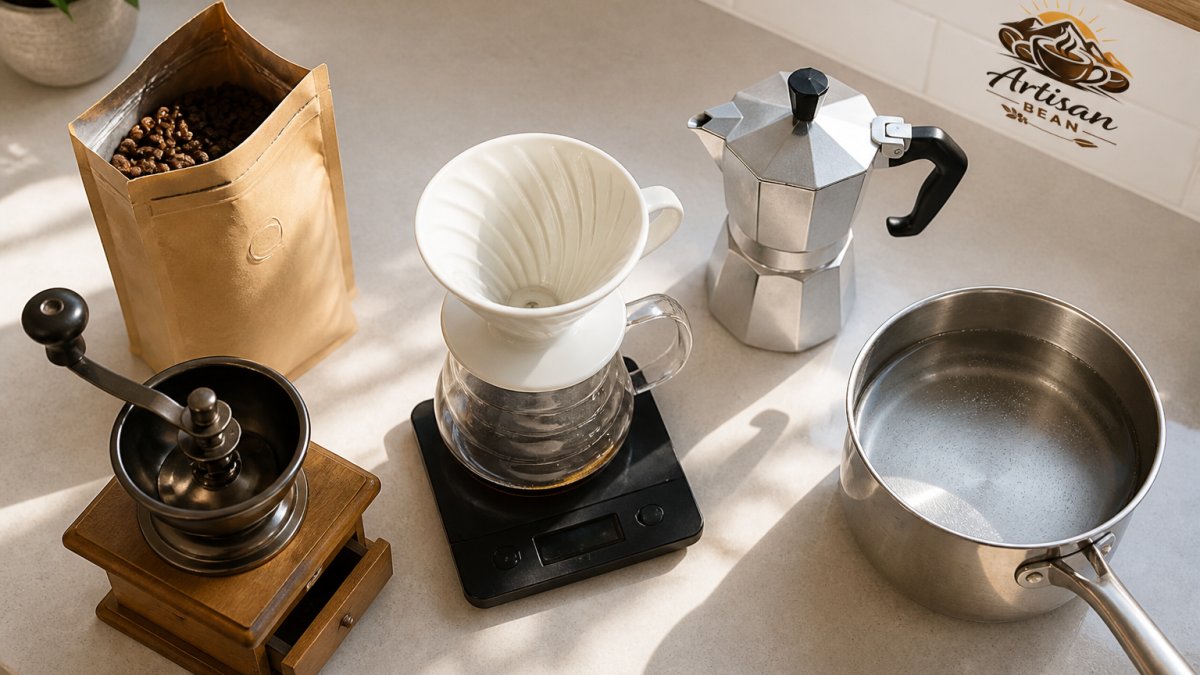
Here is the method we would use:
- Bring water to roughly 93°C, just off a rolling boil
- Add coarsely ground coffee at about 60g per litre of water
- Stir once, then let it steep for four minutes
- Skim the grounds from the surface with a spoon
- Pour through a fine mesh strainer or a clean cloth into your cup
The result is fuller and muddier than a pour-over, but with fresh beans it still shows real character. Older beans tend to taste flat and papery this way, because there is nothing left to extract.
AeroPress vs French Press: Which Suits Fresh Beans Best?
The AeroPress suits fresh beans better than a French press for most drinkers, because its paper filter and short brew time keep the cup clean while still extracting the brighter notes. A French press gives more body but lets fine particles and sediment through, which can muddy delicate flavours.
The mechanics explain the difference. A French press steeps for four minutes and relies on a metal mesh that traps almost nothing. The AeroPress pushes water through a paper filter under light pressure in one to two minutes. That shorter contact time means less over-extraction, which matters more with a fresh, lively bean than with a dull one.
Where the French press wins is texture. If you drink your coffee with milk, or you want a heavier, oilier cup, the metal mesh delivers that in a way the AeroPress cannot.
Coffee Grind Size for Brewing Methods: A Practical Chart
Grind size is the most common reason a good bean produces a bad cup. Match the grind to the method and the brew time, and most flavour problems disappear.
- Saucepan or cold brew: coarse, like sea salt
- French press: coarse to medium-coarse
- Pour-over: medium-fine, like table salt
- AeroPress: fine-medium
- Moka pot: fine, but not espresso-fine
A burr grinder produces even particles; a blade grinder produces a mix of dust and boulders. With fresh beans the difference is obvious, because uneven extraction pulls bitter and sour notes at the same time. If you are buying beans this fresh, grind immediately before brewing and treat the grinder as part of the recipe.
Coffee grind size guide from the National Coffee Association
How to Store Fresh Coffee Beans So Flavor Lasts
Store fresh coffee beans in an airtight, opaque container at room temperature, away from light, heat and moisture. Do not refrigerate them. Whole beans keep their flavour far longer than ground coffee, so grind only what you are about to brew.
Four rules cover almost everything:
- Keep beans whole until the moment you brew
- Use an airtight, opaque container, not the folded bag
- Store in a cool, dark cupboard, not above the kettle
- Buy in quantities you will finish within a few weeks
Freezing works for longer storage, but only if you seal the beans properly and defrost them fully before grinding. Opening a cold bag lets condensation form on the beans, and moisture accelerates the staling you were trying to prevent.
Matching Artisan Bean Single Origins to Each Method
Different origins reward different brewers, and matching them deliberately gets more out of a bag than any equipment upgrade.
Our Brazil Santos is a medium roast with cocoa notes and a smooth, elegant cup. It works beautifully in a moka pot, where the heavier body plays up the chocolate character. The Ethiopia Natural is a medium-light roast with milk chocolate, fruit and caramel, and it shines in a pour-over, where a clean brew lets the fruity acidity come through. If you want something that holds up in an AeroPress on a busy morning, the Guatemala brings dark chocolate, bright fruit and butterscotch in a medium roast that is forgiving of small timing errors.


For a syrupy, earthy cup, the Sumatra suits a French press, where its long, lingering body has room to show. And the Peru, with salted caramel, silky sweetness and citrus, is our pick for cold brew, because a slow steep softens its citrus edge into something rounded and sweet.
All five are $22.99, roasted to order and shipped straight after.
Conclusion: Pick the Method That Fits Your Morning
Choosing a brewer is really choosing how much control you want over a fresh bean. Pour-over gives you the most, the AeroPress gives you speed, and the saucepan gives you a cup when nothing else is available.
The bean still does most of the work. A method can only reveal what is already in the bag, which is why freshness matters more than equipment. At Artisan Bean, we roast in micro-batches to order and ship immediately after roasting, so the coffee that reaches your kitchen still tastes the way the roaster intended. Join our Coffee Club and start your mornings with beans worth brewing properly.
USDA guidance on food storage and freshness
Frequently Asked Questions
What can I use instead of a French press to make coffee?
You have several options that work well with fresh beans. A pour-over cone or a simple cup with a fine-mesh strainer can replace a French press. A moka pot gives a stronger, espresso-like cup, and an AeroPress offers a clean, quick brew. For a no-equipment approach, steep coarsely ground coffee in hot water for four minutes, then strain through a cloth or fine sieve. Each method changes the body and clarity, so try two or three to see which suits your taste.
How do you brew fresh coffee beans without a coffee maker?
Start with freshly roasted beans ground to the right size for your chosen method. For a no-machine brew, heat water to about 93°C, add coarsely ground coffee at a ratio of 1:15, stir, and let it steep for four minutes. Strain through a fine-mesh sieve or cloth. This method works best with medium or medium-light roasts like Artisan Bean's Ethiopia Natural, which keeps its fruity and caramel notes even without a dedicated brewer.
Is an AeroPress a good alternative to a French press?
Yes, especially if you prefer a cleaner cup. The AeroPress uses a paper or metal filter that traps most grounds and oils, giving a lighter body and brighter acidity, which suits fresh, light-roasted beans. A French press leaves more oils and sediment, producing a heavier mouthfeel. Both are quick and portable. If you drink a range of single origins, the AeroPress lets you adjust brew time and temperature more precisely, so you can highlight delicate notes in beans like Artisan Bean's Guatemala.
Which brewing method works best for freshly ground coffee?
Pour-over and AeroPress tend to show off freshly ground coffee best because they let you control water temperature, pour speed, and contact time. For a medium roast like Artisan Bean's Brazil Santos, a pour-over with a medium grind brings out its smooth cocoa notes without bitterness. If you prefer a heavier, syrupy cup, a French press with a coarse grind works well for Sumatra. The key is to match grind size to method and drink within a few weeks of the roast date.
How should I store fresh coffee beans to keep them tasting good?
Keep beans in an airtight, opaque container at room temperature, away from light, heat, and moisture. Do not store them in the fridge or freezer if you open the bag often, because condensation harms the beans. Buy only what you will use in two to three weeks. Artisan Bean roasts to order and ships right after, so your beans arrive near peak freshness. Transfer them to a sealed canister once opened, and grind just before brewing for the best flavor.