

Which Single Origin Coffee Is Best for Pour Over?
Last Updated: October 28, 2026
Quick Summary
The Ethiopia Natural is the best single origin coffee for pour over if you want a bright, fruit-forward cup, with a medium-light roast and notes of milk chocolate, fruity, and caramel. For acidity lovers, the Kenya offers orange, lemon, floral notes, and an effervescent quality.
- The Ethiopia Natural comes from smallholder farmers in the Sidama zone, grown at 1,700 to 1,900 metres.
- The Kenya is grown in Othaya, Nyeri County, at 1,700 to 1,890 metres and is fully washed.
- The Colombia is the most forgiving of the group, with a medium grind and standard pour.
- The Costa Rica is a medium roast with a profile of sweet apple, raisin, and honey.
- The Guatemala uses a medium-fine grind and slower pour to coax out the chocolate.
Table of Contents
- Why Single Origin Coffee Shines in a Pour-Over
- The 5 Best Single Origin Coffees for Pour Over
- A Quick Pour-Over Coffee Brewing Guide for Each Bean
- Coffee Grind Size for Pour-Over: Match It to the Bean
- Nailing Your Pour-Over Coffee Ratio
- How to Choose Your First Bag From Artisan Bean
- Frequently Asked Questions
Why Single Origin Coffee Shines in a Pour-Over
Single origin coffee is the product of one growing region, one farm or cooperative, and one harvest. At Artisan Bean, we roast these lots in small batches to order. There is nowhere to hide behind a blend.
A pour-over is a brewing method. The Specialty Coffee Association's brewing standards set water temperature and extraction targets for exactly this reason: when you control every variable, the bean itself becomes the only mystery left in the cup.
So why does single origin coffee matter here? If you have ever wondered why coffees from different origins can taste different, terroir, processing, and variety are factors to explore.
Below, we break down five single origin coffees in our lineup and what each one tastes like.
The 5 Best Single Origin Coffees for Pour Over
| Coffee | Roast | Tasting Profile | Region | Best For |
|---|---|---|---|---|
| Ethiopia Natural | Medium-light | Milk chocolate, fruity, caramel | Sidama Zone, Ethiopia | Bright, fruit-forward cups |
| Kenya | Medium | Orange, lemon, floral, effervescent | Nyeri County, Kenya | Acidity lovers |
| Colombia | Medium | Dried orange, berry, chocolate | Antioquia, Colombia | Everyday balanced brewing |
| Costa Rica | Medium | Sweet apple, raisin, honey | Alajuela, Costa Rica | Honeyed, clean sweetness |
| Guatemala | Medium | Dark chocolate, bright fruit, butterscotch | Antigua, Guatemala | Rich, dessert-like depth |
That table is the short version.
Ethiopia Natural: Fruity, Floral and Made for Filter
Start here. The Ethiopia Natural comes from smallholder farmers in the Sidama zone, grown at 1,700 to 1,900 metres on nitisol soil, and it is a full natural process: the fruit stays on the seed while it dries on raised beds, sorted by hand. The listed tasting profile is milk chocolate, fruity, and caramel.
The variety is a set of indigenous heirloom cultivars. What lands in your cup is a medium-light roast.
If you want to try it, you can shop the Ethiopia Natural.

Kenya: Bright Acidity That Cuts Through
Grown in Othaya, Nyeri County, at 1,700 to 1,890 metres and fully washed and dried on raised beds, it brings bright acidity, orange, lemon, floral notes, and a distinctly effervescent quality. The varieties are SL28, SL34, Ruiru 11, and Batian, and if you have read anything about Kenyan coffee, you already know SL28 is the reason people use words like "blackcurrant."
You can order the Kenya.
Colombia: The Balanced Everyday Cup
Not every great pour-over needs to be a spectacle. The Colombia lot comes from smallholder farmers around Medellín, grown at 1,300 to 1,500 metres on volcanic loam and fully washed and dried in solar dryers to protect the beans from rain. The varieties are Castillo, Caturra, Colombia, and Typica, and the tasting profile is dried orange, berry, and chocolate.
This is the coffee we would hand someone who says they "just want a good cup."
If you want to try it, the Colombia bean has a tasting profile of dried orange, berry, and chocolate.

Costa Rica: Honeyed Sweetness With a Clean Finish
This lot comes from micro farms in Alajuela, grown at 1,300 to 1,445 metres, eco-pulped and dried in the sun. The varieties are Caturra and Catuai, and the profile is sweet apple, raisin, and honey.
It is a medium roast.
You can buy the Costa Rica.

Guatemala: Chocolate and Butterscotch Depth
Smallholder farmers in Antigua grow it at 1,200 to 1,616 metres on volcanic loam, fully washed and sun dried, using Bourbon, Catuai, Caturra, and Typica varieties. The profile is dark chocolate, bright fruit, and butterscotch.
You can purchase the Guatemala.
A Quick Pour-Over Coffee Brewing Guide for Each Bean
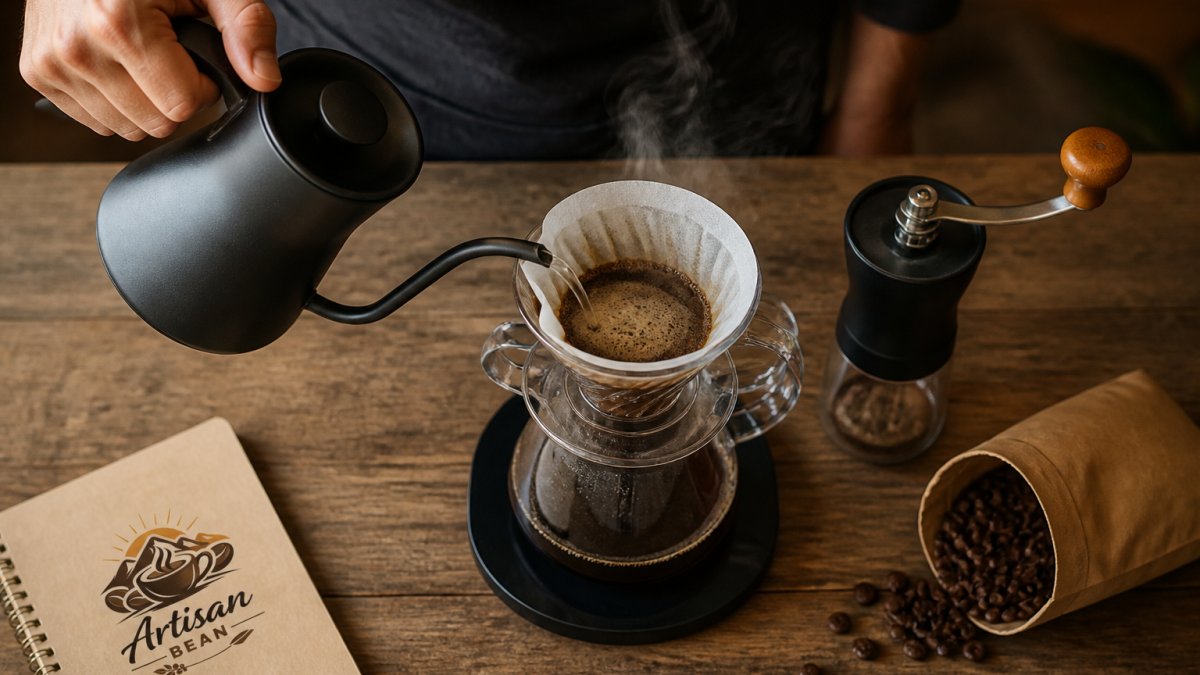
- Ethiopia Natural: medium-coarse grind, slower pour, slightly lower water temperature. Protect the fruit.
- Kenya: medium grind, pour with confidence. If it tastes sour, go finer.
- Colombia: medium grind, standard pour. The most forgiving of the group.
- Costa Rica: medium grind, steady pour. Let the honey sweetness build in the finish.
- Guatemala: medium-fine grind, slower pour. Coax out the chocolate.
Coffee Grind Size for Pour-Over: Match It to the Bean
The Coffee Research Institute's extraction guidance explains the underlying principle well: finer particles expose more surface area, which speeds extraction and pulls out more of everything, including the bitter compounds. That is why grind is the first dial to turn when a cup tastes wrong.
We ship immediately after roasting.
Nailing Your Pour-Over Coffee Ratio
The Specialty Coffee Association's water quality guidance is worth reading if your cups taste consistently off despite good beans and good technique. Water makes up most of the cup, and hard water can mute the delicate notes in a coffee like the Ethiopia Natural.
How to Choose Your First Bag From Artisan Bean
Picking your first bag comes down to the flavors you prefer. Ethiopia Natural has tasting notes of milk chocolate, fruit, and caramel; Kenya lists orange, lemon, and floral notes; Guatemala lists dark chocolate, bright fruit, and butterscotch; and Colombia lists dried orange, berry, and chocolate.
We roast in micro-batches and ship right after roasting.
A final note on the ritual itself. Grinding beans, heating water, and pouring in slow circles is a few minutes of deliberate calm before the day starts.
Frequently Asked Questions
What is the best single origin coffee for pour-over?
There is no single winner, because the best cup depends on the flavors you enjoy. If you like fruity notes, Ethiopia Natural lists fruit, while Kenya lists orange, lemon, and floral notes. Costa Rica lists sweet apple, raisin, and honey; Guatemala lists dark chocolate, bright fruit, and butterscotch. Colombia lists dried orange, berry and chocolate notes.
What grind size should I use for pour-over coffee?
Start with a medium grind, close to the texture of table salt, and adjust from there. A medium-light bean like Ethiopia Natural or Tanzania often performs well slightly finer, while a medium roast like Guatemala can go a touch coarser. If the brew drains too fast and tastes thin, grind finer. If it stalls and tastes bitter, go coarser. Change one variable at a time so you can taste what actually shifted.
How much coffee should I use for pour-over?
A pour-over coffee ratio of about 1:16 is a reliable starting point, meaning 1 gram of coffee to 16 grams of water. For a single 250 ml cup, that is roughly 15 to 16 grams of ground coffee. If you want a stronger cup, tighten the ratio to 1:15. Keep the ratio fixed while you dial in grind size, then adjust the ratio once the grind is right.
Is single origin coffee better for pour-over than a blend?
Single origin coffee can offer tasting profiles associated with a specific origin and process. Artisan Bean's Ethiopia Natural is full natural processed, while its Kenya is fully washed. Their listed tasting profiles differ. The Ethiopia Natural lists milk chocolate, fruit, and caramel; Kenya lists orange, lemon, and floral notes.
Should I use freshly roasted coffee for pour-over?
Artisan Bean roasts in micro-batches to order and ships right after roasting.
The challenge is simple: most people never taste what a single origin coffee can actually do because the beans were stale before they reached the kitchen. We roast in micro-batches, ship immediately after roasting, and partner directly with sustainable farms so the cup you brew is the cup the roaster intended. Join our Coffee Club and turn your morning pour-over into the best few minutes of your day.
