

7 Alternatives to Automatic Drip Coffee Machines
Last Updated: October 25, 2026
Quick Summary
The best alternatives to automatic drip coffee machines are pour-over, French press, AeroPress, Moka pot, cold brew, instant coffee, and single-serve capsules. Each method trades hands-off convenience for control, speed, low waste, or lower cost per cup. Pour-over and AeroPress suit solo drinkers, while French press and cold brew batches fit couples and families.
- Pour-over brews in 3-4 minutes and gives you control over grind, water temperature, and pour pace.
- Cold brew steeps coarse grounds in cold water for 12 to 18 hours, making a low-acid concentrate you dilute to taste.
- Start manual brewing at about 1 gram of coffee to 16 grams of water, roughly 60 grams per litre.
- The French press loses on cleanup because wet grounds need rinsing and fine particles cling to the mesh.
- Time one full brew-and-clean cycle before buying to confirm a method fits your actual morning.
Table of Contents
- Why Brewers Are Rethinking the Automatic Drip Machine
- French Press vs Automatic Drip Coffee: Which Wins Your Kitchen?
- How to Make Coffee Without a Coffee Maker
- Nailing the Coffee-to-Water Ratio for Manual Brewing
- Low-Waste Coffee Brewing Methods That Cut the Clutter
- Cost, Effort, and Cleanup: A Side-by-Side Reality Check
- Choosing Your Bean and Method With Artisan Bean
- Frequently Asked Questions
Why Brewers Are Rethinking the Automatic Drip Machine
The automatic drip coffee maker earned its place on the counter for one reason: it asks nothing of you. Load grounds, add water, press a button.
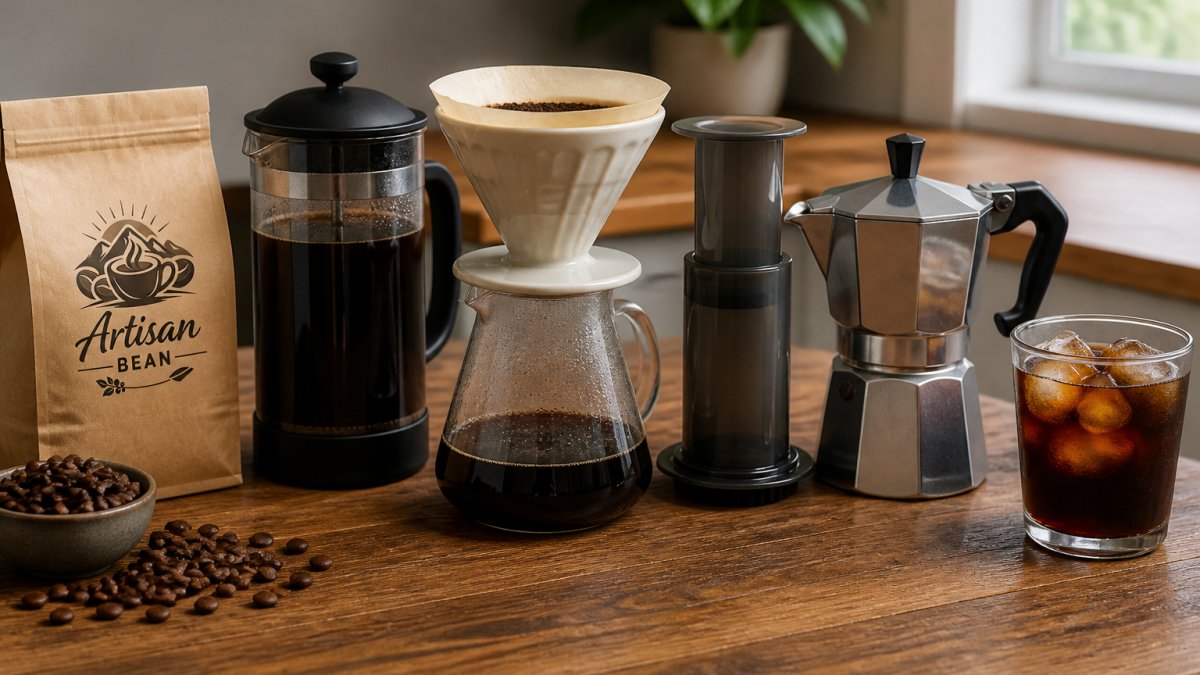
The 7 Best Alternatives to Automatic Drip Coffee Machines Compared
Seven methods stand in for the drip machine, and each one solves a different problem. Some prioritize control, others speed, and a few win on cost and cleanup. Here's the lineup before we get into the details:
| Method | Brew Time | Effort | Cleanup | Best For |
|---|---|---|---|---|
| Pour-over | 3-4 min | Moderate | Low | Control and clarity |
| French press | 4-5 min | Low | Moderate | Full body, no paper |
| AeroPress | 2-3 min | Low | Low | Speed and travel |
| Moka pot | 5-6 min | Low | Moderate | Strong, espresso-like cups |
| Cold brew | 12-18 hrs | Very low | Low | Make-ahead, low acid |
| Instant | Under 1 min | None | None | Pure speed |
| Capsules | 1-2 min | None | Low | Portion control |
If you want to see how these sit alongside other brewing styles, our full list of coffee brewing methods is a useful reference point.
Pour-Over: Maximum Control and Clarity
Pour-over is a manual brewing method where hot water is poured slowly over coffee grounds in a filter, giving you direct control over extraction (Drip coffee). You decide the grind, the water temperature, and the pace of the pour. That control produces a clean, bright cup that highlights a bean's origin notes. The trade-off is attention: you can't walk away mid-brew.
French Press: Full Body With Zero Paper
The French press steeps coarse grounds in hot water, then a metal mesh plunger separates them from the liquid (French press). Immersion pulls more oils and fine particles into the cup, so the body is heavier and the flavor rounder. If you're new to the press, our guide to the best coffee for French press covers which beans and roasts shine in immersion brewing.
AeroPress: Speed and Portability
The AeroPress is a compact manual brewer that pushes water through grounds with air pressure. It brews a single cup in about two minutes and packs into a bag for travel or office use. Cleanup takes seconds: pop the puck of grounds into the bin and rinse. For one person who wants good coffee fast, it's hard to beat.
Moka Pot: Stovetop Intensity
A Moka pot uses steam pressure to push hot water up through finely ground coffee, producing a strong, concentrated cup closer to espresso than drip. It works on any stovetop and costs very little. The catch is heat management: too high a flame scorches the coffee and turns it bitter. Keep the flame low and pull the pot off as soon as it starts to gurgle.
Cold Brew: Low-Acid, Make-Ahead Convenience
Cold brew steeps coarse grounds in cold water for 12 to 18 hours, yielding a smooth, low-acid concentrate you dilute to taste. You make a batch once and pour from it all week. It's the least demanding method on this list, provided you plan ahead.
Instant Coffee: The Fastest Route to a Cup
Instant coffee is dried, pre-brewed coffee that dissolves in hot water (Instant coffee). It wins on speed and cleanup with no equipment at all. Quality varies widely, and the best modern instant options taste far better than the old reputation suggests. Artisan Bean's instant coffee comes in a resealable pouch with 30 servings, and the instant coffee with mushroom blends in lion's mane, cordyceps, and reishi for about 42 servings.

Single-Serve Capsules: Portion Control Without the Machine
Single-serve capsules deliver a measured dose of coffee sealed against oxygen, so each cup stays fresh until you brew it. They suit households where one person drinks coffee and the other doesn't, since there's no pot to waste. Artisan Bean's 12 pack single serve coffee capsules use an improved filter design that absorbs more grounds without slowing the brew, and the 60 pack suits daily drinkers.


French Press vs Automatic Drip Coffee: Which Wins Your Kitchen?
The French press wins on flavor control and waste; the automatic drip machine wins on hands-off convenience. A drip machine holds a pot warm for hours and serves a crowd without attention. A press demands four minutes of your morning but gives you a fuller, more aromatic cup with no paper filter to buy. If you're weighing the press against other options, our French press comparison goes deeper.
How to Make Coffee Without a Coffee Maker
You can make coffee without a coffee maker using nothing more than a pot, hot water, and grounds. Cowboy coffee is the classic method: bring water to a boil, stir in coarse grounds, let it steep four minutes, then settle the grounds with a splash of cold water before pouring. A fine mesh strainer or a clean cloth filters out the rest.
Nailing the Coffee-to-Water Ratio for Manual Brewing
The coffee-to-water ratio for manual brewing starts at about 1 gram of coffee to 16 grams of water. That translates to roughly 60 grams of grounds per litre of water, or two level tablespoons per six-ounce cup. Stronger cups move toward 1:14; lighter, tea-like cups toward 1:18. Grind size matters just as much: coarse for French press and cold brew, medium for pour-over and drip, fine for Moka pot and espresso.
Low-Waste Coffee Brewing Methods That Cut the Clutter
Low-waste brewing means choosing methods that skip disposable paper filters and single-use packaging. French press, Moka pot, and cold brew all use reusable metal or cloth filters, so the only thing you throw away is the spent grounds, which compost well. Pour-over can go low-waste too with a reusable filter, though paper gives a cleaner cup.
Cost, Effort, and Cleanup: A Side-by-Side Reality Check
Most comparisons stop at flavor. The practical questions, what it costs to own, how much of your morning it takes, and how much cleanup it leaves, decide whether a method survives past the first week. Here's a consistent comparison across all seven alternatives, plus the household and accessibility angles most guides skip.
Upfront and ongoing cost
Manual gear is cheap to buy and cheap to run. A pour-over dripper, French press, AeroPress, or Moka pot typically costs less than a mid-range automatic drip machine, and the recurring cost is mostly beans. French press, Moka pot, and cold brew use reusable metal or cloth filters, so there's no filter line item at all. Pour-over adds a small recurring paper-filter cost.
Effort: active vs passive time
Effort splits into active time (hands on the gear) and passive time (waiting). Pour-over has the most active time because you're pouring in stages. AeroPress and Moka pot are short and mostly hands-off once loaded. French press is low-effort but requires a timed steep and a plunge. Cold brew is almost entirely passive, combine and wait, but demands planning ahead.
Cleanup compared
Cleanup is where the French press loses ground: wet grounds need rinsing from the carafe, and fine particles cling to the mesh. Moka pot cleanup means rinsing the basket and gasket and avoiding harsh detergents on aluminum. Pour-over is easy, compost the filter and rinse the dripper, but paper filters add a small waste stream unless you use a reusable one.
Matching method to household and routine
Method choice should follow household size and morning rhythm, not flavor alone. Solo drinkers who want control do well with pour-over or AeroPress; a French press or cold brew batch suits couples and small households; families filling several mugs before school need the capacity of a French press or a cold brew batch, since pour-over and AeroPress brew one cup at a time.
Accessibility and physical effort
Dexterity, lifting, and pouring matter more than most guides admit. Pour-over requires a steady, controlled pour and a kettle you can lift, harder for anyone with wrist or shoulder limitations. A French press needs a firm, even plunge. AeroPress is light and easy to press but still needs a firm push. Moka pot requires assembling small parts and lifting a hot metal pot.
Choosing Your Bean and Method With Artisan Bean
The method sets the ceiling on your cup; the bean decides what's under it. Stale coffee tastes flat no matter how carefully you brew, which is why we roast in small batches, on order, and ship right after roasting. Our guide to choosing a coffee roast walks through how roast level changes flavor in each brewing style, and our coffee club delivers fresh-roasted beans on your schedule so you never run out mid-week.
Frequently Asked Questions
What is the best alternative to an automatic drip coffee machine?
It depends on what you value most. A French press gives the fullest body with no paper filters and minimal gear. Pour-over delivers the cleanest, most controllable cup if you enjoy the process. For speed and portability, an AeroPress is hard to beat. If you want set-and-forget convenience, cold brew made in batches or single-serve capsules work well. Try one method for a week before buying another; most people settle on two: one fast option for weekdays and one slower ritual for weekends.
How do you make coffee without a coffee maker?
You can brew a solid cup with just a mug, hot water, and ground coffee. Add about 15 grams of medium-ground coffee to 250 ml of water just off the boil, stir, wait four minutes, then let the grounds settle and pour slowly. A fine mesh strainer or a paper filter catches the rest. Cowboy coffee and Turkish-style brewing follow the same principle: steep, settle, pour. The result is closer to a French press than a drip machine, with more body and sediment.
What is the difference between French press coffee and automatic drip coffee?
A French press steeps grounds in water for about four minutes and uses a metal mesh to separate them, so oils and fine particles stay in the cup. That gives more body and a heavier mouthfeel. An automatic drip machine passes water through a paper filter, which traps oils and produces a cleaner, lighter cup. The French press also gives you full control over brew time and water temperature, while a drip machine handles those for you at the cost of flexibility.
What coffee-to-water ratio should I use for manual brewing?
Start with 1:15 to 1:17 by weight, meaning one gram of coffee for every 15 to 17 grams of water. For a standard 250 ml mug, that is roughly 15 grams of coffee. If the cup tastes weak or sour, add a gram or two of coffee or grind finer. If it tastes bitter or harsh, back off slightly. Keep a small kitchen scale on the counter; volume scoops vary too much between grinds to be reliable.
Which brewing method is easiest on waste and cleanup?
A French press or Moka pot produces no paper waste, and spent grounds go straight into compost. Pour-over uses a paper filter per cup unless you switch to a reusable cloth or metal filter. Single-serve capsules generate packaging waste, though Artisan Bean's 12 and 60 pack capsules keep the coffee sealed and fresh. Cold brew made in a reusable jar or filter bag is another low-waste route, and the concentrate keeps for about a week in the fridge.
Your morning coffee shouldn't taste like an afterthought. If you're ready to trade the hot plate for a method that rewards a little attention, Artisan Bean roasts micro-batch beans to order and ships them fresh, with no inventory sitting on a shelf and no staleness in the bag. Start with our coffee club and taste what fresh-roasted actually means in your cup.
