

How to Identify Ethically Sourced Coffee Beans
Table of Contents
- What Makes Coffee Ethically Sourced
- The Difference Between Fair Trade and Direct Trade Coffee
- Coffee Certification Labels Explained
- How to Read Coffee Labels and Verify Certifications
- Finding Sustainably Sourced Coffee Beans Online
- Questions to Ask Your Coffee Roaster
- The Role of Supply Chain Transparency in Ethical Coffee
- Conclusion
- Frequently Asked Questions
Last Updated: October 2, 2026
What Makes Coffee Ethically Sourced
Ethically sourced coffee beans are grown and harvested under conditions that prioritize fair compensation for farmers, environmental sustainability, and transparent supply chain practices, with traceability from farm to cup.
Ethically sourced coffee eliminates exploitation through direct relationships, cooperative structures, or third-party certification that guarantees living wages, bypassing middlemen who pay below-market rates.
Sustainable agriculture practices protect soil health, preserve water quality, and maintain biodiversity, supporting farms that invest in their land's future rather than extracting value from it.
At Artisan Bean, we partner directly with sustainable farms, separating authentic ethical sourcing from greenwashing.
The Difference Between Fair Trade and Direct Trade Coffee
Fair Trade and direct trade both improve farmer livelihoods but operate differently, the label you choose shapes how your money reaches growers.
Fair Trade certification sets minimum prices and requires labor and environmental compliance, protecting smaller farmers during market downturns.
Direct trade cuts out middlemen, with roasters buying directly from farmers and negotiating prices based on quality.
Fair Trade suits farmers needing price stability; direct trade benefits established farms with consistent quality.
Fair Trade International's certification standards outline the specific requirements for Fair Trade labeling, while direct trade relationships vary by roaster and farm agreement.
Coffee Certification Labels Explained
Coffee aisles display confusing certification seals with different standards and verification processes. Learning to read these labels lets you verify actual ethical practices.
Third-Party Certifications to Look For
Fair Trade Certified guarantees minimum prices, prohibits child labor, and requires environmental standards.
Rainforest Alliance Certified focuses on environmental sustainability and worker welfare, requiring forest protection, water conservation, and safe conditions.
UTZ Certified emphasizes sustainable farming and supply chain transparency, with farms using fewer chemicals and investing in worker training.
Single-Origin and Single-Estate labels indicate traceability: single-origin means one country or region; single-estate means one specific farm.
Spotting Greenwashing on Coffee Labels
Greenwashing occurs when brands use vague environmental language without certification or transparency. Words like "natural," "sustainable," or "eco-friendly" carry no legal definition in the coffee industry.
Red flags: "ethically sourced" claims without certification logos or farm names; vague phrases like "supports sustainable farming"; farm images with no traceable connection to the beans; unofficial-looking certification logos.
Legitimate ethical coffee includes the farm name, certification body, roast date, and batch number linking to supply chain records. Without these, ethics claims are likely marketing.
Rainforest Alliance certification verification allows you to search certified farms by name, confirming whether a coffee truly meets their standards.
How to Read Coffee Labels and Verify Certifications
Reading a coffee label correctly is the fastest way to verify genuine ethical sourcing, the information you need is almost always on the bag.
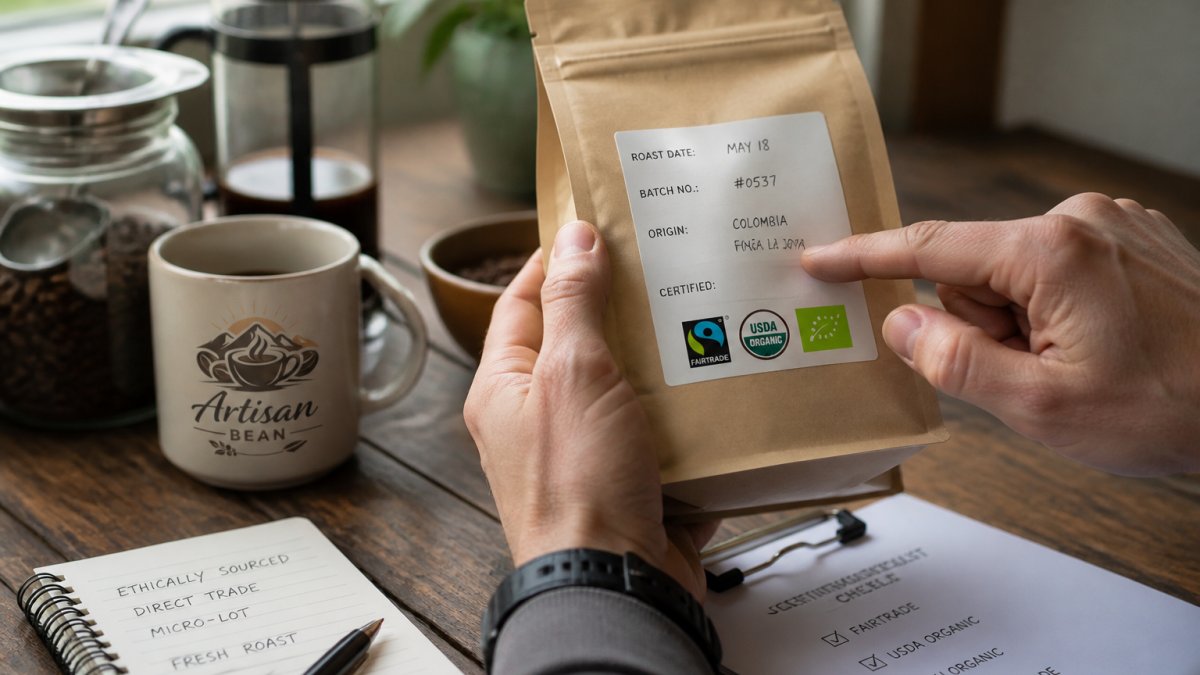
Step 1: Check the Roast Date and Batch Number
The roast date tells you how fresh the coffee is. Coffee is at its peak flavor within two to four weeks of roasting. After that, it begins to stale.
The batch number is your link to supply chain transparency. Many ethical roasters use batch codes that correspond to specific farms, harvest dates, and lot numbers. Some roasters publish batch information on their websites, allowing you to trace exactly where those beans came from and when they were harvested.
Step 2: Identify the Origin and Grower Information
Look for the country or region where the coffee was grown. Single-origin coffees list a specific farm, cooperative, or region. This information matters because it lets you research the specific farm's practices and certifications independently.
Many ethical roasters now include the farmer's name or cooperative name on the bag. This level of transparency signals genuine direct relationships.
The altitude and processing method also appear on quality bags.
Step 3: Verify Certification Logos and Databases
Certification logos should be clear and recognizable. Look for Fair Trade, Rainforest Alliance, Organic USDA, or UTZ seals.
Most certifications include a code or reference number on the bag. Fair Trade certification numbers, for example, allow you to verify the roaster's license on the Fair Trade International website.
Fair Trade USA's roaster directory lets you search by company name to verify whether a specific roaster holds valid Fair Trade certification.
Finding Sustainably Sourced Coffee Beans Online
Purchasing ethically sourced coffee online gives you access to specialty roasters who prioritize direct relationships and transparency. Many direct-trade roasters operate exclusively online, shipping fresh-roasted beans directly to your door within days of roasting.
Start by identifying roasters who publish their sourcing information.
Look for roasters who roast to order.
Check whether the roaster offers single-origin options. Single-origin coffees let you explore specific farms and regions, building your understanding of how terroir and farming practices influence flavor.
Read customer reviews that mention freshness, flavor clarity, and whether the coffee matched the roaster's description.
Many ethical roasters offer subscription models that let you receive fresh coffee regularly without committing to large upfront purchases.
Questions to Ask Your Coffee Roaster
Direct conversation with your roaster reveals details no label can convey.
Ask where the coffee comes from and whether the roaster has visited the farm.
Inquire about the roaster's certification standards. Do they work exclusively with Fair Trade farms?
Ask about farmer compensation.
Request information about supply chain traceability.
Ask whether the roaster conducts farm visits or maintains relationships beyond price negotiations.
Inquire about environmental practices. Does the roaster prioritize organic farming?
Specialty Coffee Association resources on sourcing provide frameworks for understanding the questions serious roasters ask their suppliers.
The Role of Supply Chain Transparency in Ethical Coffee
Supply chain transparency is the foundation of ethical sourcing verification. Without it, certification labels become theater and farm names become marketing claims.
Batch numbers and lot codes are the tools of transparency.
Certification databases add another layer.
Some roasters now use blockchain or other digital systems to create immutable supply chain records.
Transparency also means roasters disclose their profit margins and sourcing costs.
Conclusion
Identifying ethically sourced coffee beans requires understanding certifications, reading labels carefully, and asking roasters direct questions about their sourcing practices. The work pays off in coffee that tastes better, supports farmers fairly, and aligns with your values.
At Artisan Bean, we've built our entire business around ethical sourcing and transparency. Our direct partnerships with sustainable farms and micro-batch roasting on order mean you always know exactly where your coffee comes from. Explore our single-origin selections like our Bali Blue, sourced from smallholder farmers in Kintamani and roasted to order to guarantee peak freshness. Join our Coffee Club and experience the difference that genuine ethical sourcing and fresh roasting make in your daily ritual.

| Certification | Focus | Verification Method |
|---|---|---|
| Fair Trade | Fair wages and labor standards | Fair Trade International database |
| Rainforest Alliance | Environmental sustainability | Rainforest Alliance farm search |
| USDA Organic | Chemical-free farming | USDA certification records |
| Direct Trade | Farmer relationships and pricing | Roaster transparency documentation |
Frequently Asked Questions
What is the difference between Fair Trade and direct trade coffee?
Fair Trade certification guarantees farmers receive a minimum price set by Fair Trade organizations, providing economic stability against market volatility. Direct trade involves roasters buying directly from farms, often at higher prices negotiated personally with growers. Direct trade typically offers greater farmer compensation and supply chain transparency, but lacks third-party verification. Fair Trade provides independent auditing and certification, making it easier to verify claims. Both models aim to improve farmer welfare, but direct trade relationships allow more control over pricing while Fair Trade offers standardized protections across multiple producers.
How can I tell if a coffee brand is actually paying farmers fairly?
Look for specific pricing transparency: ethical roasters often publish the price paid per pound to farmers. Check for third-party certifications like Fair Trade, Rainforest Alliance, or direct trade partnerships with named cooperatives and farms. Visit the roaster's website for detailed supply chain information including farmer names, farm locations, and altitude. Ask the roaster directly about farmer compensation and request documentation. Avoid vague claims like 'ethically sourced' without supporting certifications or specific grower details. Roasters committed to fair compensation will provide batch numbers, lot codes, and traceable supply chain audits.
What are the most reliable certifications for ethically sourced coffee?
Fair Trade Certified, Rainforest Alliance, and Organic certifications are among the most recognized. Fair Trade guarantees minimum prices and labor standards verified by independent inspectors. Rainforest Alliance focuses on environmental stewardship and sustainable agriculture practices. Organic certification ensures no synthetic pesticides. UTZ Certified emphasizes traceability and supply chain auditing. Bird Friendly certification protects habitat while ensuring sustainable farming. Direct trade partnerships, while unregulated, often provide the highest farmer compensation when backed by transparency and verifiable relationships with named cooperatives and smallholder farmers.
Does 'ethically sourced' mean the same thing as 'organic'?
No. Organic refers to farming practices without synthetic pesticides or fertilizers, focusing on environmental impact. Ethically sourced addresses social responsibility: fair wages, safe working conditions, and economic stability for farmers. Coffee can be organic but not ethically sourced if farmers aren't paid fairly. Conversely, ethically sourced coffee may not be certified organic. For comprehensive ethical sourcing, look for coffees that combine both organic certification and fair trade or direct trade partnerships, ensuring environmental stewardship and farmer compensation work together.
How do I verify a coffee roaster's ethical claims using certification databases?
Visit the official websites of certifying bodies: Fair Trade International, Rainforest Alliance, and UTZ each maintain searchable databases where you can enter a product's certification number to confirm legitimacy. Check the batch number or lot code on your coffee bag against the roaster's supply chain records. Request a Certificate of Origin from the roaster showing the farm, cooperative, altitude, and harvesting practices. Cross-reference the roaster's website claims against independent third-party audits. Legitimate roasters provide government-accredited inspector reports and welcome questions about traceability. If a roaster cannot provide verifiable documentation, their ethical claims are unreliable.
What should I look for on a coffee label to identify ethically sourced beans?
Look for: a recent roast date (within 2-4 weeks of purchase), batch or lot number for traceability, specific origin details (farm name, region, altitude, cooperative), certification logos (Fair Trade, Rainforest Alliance, Organic), and processing method (washed, natural, pulped natural). Check for grower information and cooperative names rather than vague 'smallholder farmers' claims. Avoid labels with only country-of-origin and no specific farm or cooperative details. Quality ethical sourcing shows altitude (typically 1,200-1,900 meters for specialty coffee), soil type, and harvesting practices, demonstrating supply chain transparency and genuine farmer relationships.
What is greenwashing in the coffee industry, and how do I spot it?
Greenwashing occurs when roasters use vague sustainability language without third-party verification or specific details. Red flags include: 'ethically sourced' or 'sustainable' with no certification logos or verifiable proof, no batch numbers or lot codes, missing grower or farm names, and generic claims like 'supports small farmers' without naming them. Legitimate ethical coffee provides specific information: named cooperatives, altitude, processing methods, certification details, and batch traceability. Compare labels against roasters who publish detailed supply chain audits and farmer compensation data. If a roaster cannot provide verification through databases or documentation, their claims are likely greenwashing.