

Is a Manual Espresso Press Worth the Effort?
Last Updated: October 30, 2026
Quick Summary
A manual espresso press is worth the effort if you value control over convenience, since it rewards attention and punishes hurry. It asks for a decent grinder, a scale, and roughly ten minutes of your morning, but gives back control you cannot buy on an automatic machine at any price.
- Pair your press with a decent grinder, because a cheap blade grinder makes pressure unpredictable.
- Weigh a consistent double dose, typically in the 15 to 18 gram range.
- Aim for a slow, honey-like flow rather than a gush.
- Beginners often pull bad shots in week one but improve by week four if they stick with it.
- Fresh-roasted beans matter more than the press, since no lever compensates for a flat bean.
Table of Contents
- What a Manual Espresso Press Actually Asks of You
- Manual Espresso Machine Pros and Cons
- Manual vs Automatic Espresso Machine: Control Against Convenience
- How to Use a Manual Espresso Press Without Wasting Shots
- Is a Manual Espresso Machine for Beginners a Realistic Starting Point?
- The Beans Decide the Verdict: Why Fresh Roast Matters More Than the Press
- Join the Artisan Bean Coffee Club and Put Your Press to Work
- Frequently Asked Questions
What a Manual Espresso Press Actually Asks of You
A manual espresso press is a brewer that uses your own arm strength to force hot water through a packed puck of coffee, and whether it's worth the effort depends far more on your temperament than your budget. At Artisan Bean, we roast for people who treat the morning cup as a ritual, so we have a clear stake in this question. Here is the honest answer up front: a manual press rewards attention and punishes hurry. It asks for a decent grinder, a scale, and roughly ten minutes of your morning. What it gives back is control you cannot buy on an automatic machine at any price. Below, we break down exactly what the effort looks like, who should skip it, and why the beans in the basket matter more than the lever above them.
Here is what a manual espresso press demands of you before you buy one.
| Item | Value | Note |
|---|---|---|
| Grinder | A decent grinder | A cheap blade grinder makes pressure unpredictable |
| Scale | A scale | Needed to weigh your dose |
| Morning time | Roughly ten minutes | The press rewards attention and punishes hurry |
| Double dose | 15 to 18 grams | Stay consistent on the scale |
| Flow | Slow, honey-like | Not a gush |
Manual Espresso Machine Pros and Cons
The core trade-off is simple: manual machines offer control and cost savings, while automatic machines offer consistency and speed. Neither design makes better espresso on its own. A skilled hand on a lever can outperform most automatics, but an automatic delivers reliably good shots without requiring skill. That distinction, noted in comparison guidance on manual versus automatic espresso machines, is the one most buying guides blur.
The pros of going manual:
- Full control over pressure, pre-infusion, and shot timing
- Lower entry cost than a comparable automatic
- A smaller footprint on the counter
- A genuinely engaging process, which is the point for many home baristas
The cons are just as real:
- A longer learning curve before your first drinkable shot
- More variables to manage, so more chances to go wrong
- No push-button repeatability when you are rushed
- Cleanup and reset between shots take real time
Watch out: the most common first purchase mistake is pairing a manual press with a cheap blade grinder. Inconsistent grind size makes pressure unpredictable, and you will blame the machine for a problem that starts in the grinder.
Manual vs Automatic Espresso Machine: Control Against Convenience
Choosing between a manual and an automatic espresso machine comes down to one question: do you want to drive, or do you want to be driven? A manual press hands you every variable. An automatic absorbs those variables and hands you a consistent cup in exchange for money and counter space.
The manual espresso machine pros and cons stack up differently depending on your mornings. If you wake at six and need caffeine before you can think, an automatic wins on pure practicality. If the making is part of the pleasure, manual wins on engagement. There is no universal right answer, only a right answer for your routine.
Stale coffee tends to taste flat no matter which machine brews it, and fresh coffee tends to taste more vivid even from a modest press.
How to Use a Manual Espresso Press Without Wasting Shots
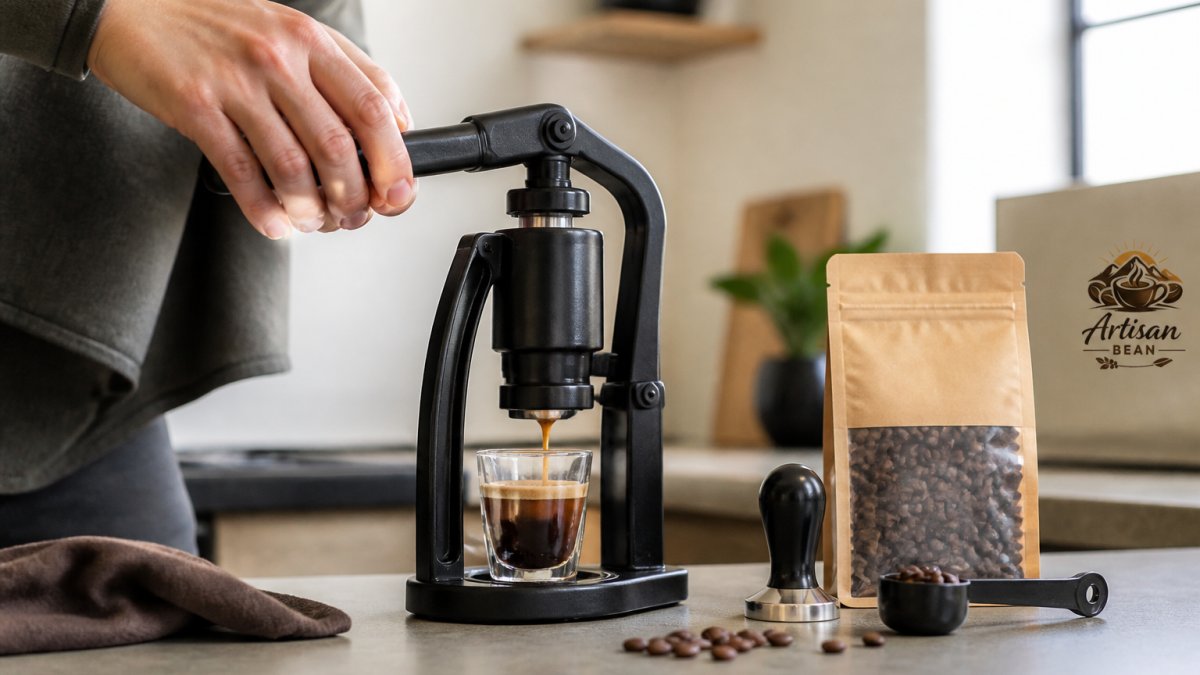
Using a manual espresso press well means controlling four things in order: dose, grind, distribution, and pressure. Get those right and you will waste far fewer shots during the learning phase. Here is the sequence we would follow.
- Weigh your dose. Use a scale and stay consistent, typically in the 15 to 18 gram range for a double.
- Grind fine and fresh. Adjust finer if the shot runs fast, coarser if it chokes.
- Distribute and tamp level. An uneven puck channels water and ruins extraction.
- Pre-infuse gently. A slow, light pressure ramp wets the puck evenly before the main push.
- Hold steady pressure. Aim for a slow, honey-like flow, not a gush.
- Stop by weight or time. Note what you did so you can repeat it.
If you are still building the fundamentals, our beginner espresso brewing guide walks through dialing in technique step by step.
Watch out: do not chase pressure numbers before your grind is dialed in. Cranking harder on a bad grind produces bitter, channelled shots, not better ones.
Is a Manual Espresso Machine for Beginners a Realistic Starting Point?
A manual espresso machine for beginners is realistic, but only with honest expectations. You will pull bad shots in week one. You will pull inconsistent shots in week two. By week four, most people who stick with it produce a cup they genuinely prefer to their old routine.
The beginners who struggle are usually the ones who bought the press to save time. The ones who thrive bought it to learn something. That is the real filter, not skill level.
A useful approach is to start with one variable at a time: change only the grind between shots until the flow looks right, then adjust dose.
The Beans Decide the Verdict: Why Fresh Roast Matters More Than the Press
Fresh-roasted beans matter a great deal, since coffee's aromatic complexity fades after roasting and no lever fully compensates for a flat bean. This is where the manual-versus-automatic debate quietly resolves itself.
If you want to understand the chemistry and storage side, our guide to coffee freshness explains what actually fades and why. For concrete picks to run through your press, see our guide to the best coffee beans for home brewing. And once the bag is open, how to store coffee beans keeps that freshness intact.
Start forgiving, then get adventurous.
Join the Artisan Bean Coffee Club and Put Your Press to Work
The honest answer to whether a manual espresso press is worth the effort is this: the press is worth it if the beans are. A lever cannot rescue stale coffee, and fresh coffee makes even a clumsy shot taste like progress.
That is the problem Artisan Bean was built to address. We roast in micro-batches, on order, and ship right after roasting. Our African Espresso is a medium/dark blend of coffee from Kenya, Tanzania, and Ethiopia.

Start with a bag, dial in your press, and taste what the effort is actually for.
Frequently Asked Questions
Is a manual espresso press worth the effort for a daily drinker?
It depends on what you want from the ritual. A manual espresso press hands you control over pressure and shot timing, which is why some home baristas prefer it. The trade-off is real: manual brewing takes longer to learn and longer per shot than an automatic machine. If you drink one or two espresso-based drinks a day and enjoy the process, the effort pays back in control. If you want speed before work, an automatic machine delivers reliably good results with less fuss.
Are manual espresso machines any good compared with automatic ones?
Neither type makes better espresso on its own. A skilled barista on a manual espresso machine can outperform most automatics, while an automatic machine produces consistently good results with minimal input. The deciding factor is you: manual machines reward practice and attention, and automatic machines remove the variables. Weigh your patience for learning against your need for repeatability, then pick the side of that trade-off that matches your mornings.
Do manual espresso machines require a grinder?
A grinder is effectively essential for a manual espresso press. Manual machines are sensitive to grind size, and pre-ground coffee loses aroma and adjusts poorly to the pressure you apply. Freshly ground beans give you the control the press is designed for. Pair the press with whole beans roasted close to the ship date, such as Artisan Bean's micro-batch roasts, and grind immediately before each shot so the manual espresso press has fresh material to work with.
How long does it take to make espresso with a manual machine?
Expect a few minutes per shot once you know the routine: grind, dose, tamp, fill, and press. Early attempts take longer because you are learning pressure and timing, and some shots will miss. The manual espresso machine pros and cons list starts here, since the time cost is the main drawback. Build the habit on a relaxed morning rather than a rushed one, and the process settles into a few calm minutes.
If your shots taste flat despite good technique, the beans are the first thing to change. Artisan Bean roasts to order in small batches and ships immediately, with no inventory sitting between the roaster and your door. Explore the African Espresso blend, or browse the full range of espresso roasts, and give your manual press coffee worth the work. Get started with Artisan Bean and taste the difference freshness makes in your morning ritual.
