

Is Fresh Roasted Coffee Worth It? A 2026 Review
Table of Contents
- Fresh Roasted Coffee vs Grocery Store Coffee: What the Bag Doesn't Tell You
- How Long Coffee Beans Stay Fresh After Roasting
- The Best Time to Brew Coffee After Roasting (And Why Too Fresh Can Taste Flat)
- How to Store Coffee Beans to Keep Them Fresh
- The Real Cost Per Cup: Fresh Roasted Coffee vs Grocery Store Beans
- A Controlled Side-by-Side Tasting Method You Can Do at Home
- Verdict: Who Should Buy Fresh Roasted Coffee (And Who Can Skip It)
- Frequently Asked Questions
Last Updated: October 18, 2026
Fresh Roasted Coffee vs Grocery Store Coffee: What the Bag Doesn't Tell You
Fresh roasted coffee is coffee that has been roasted in small batches and shipped within days of roasting, rather than sitting in a warehouse or on a store shelf for weeks or months. At Artisan Bean, we roast to order and ship immediately, because the gap between roast date and brew date is the single biggest factor separating a vibrant cup from a flat one.
Here's the number most coffee bags hide: the roast date. Grocery-store coffee usually carries a best-before date, not a roast date. That's not an accident. A best-before window can run for months, which means the beans inside may have been roasted long before they reached the shelf.
What actually happens to coffee as it ages? Three things, in order:
- Degassing: beans release carbon dioxide for days after roasting, which is why very fresh coffee can taste flat or foamy.
- Oxidation: air exposure breaks down the aromatic compounds that create complex flavor notes.
- Staling: surface oils on darker roasts turn rancid faster, muting sweetness and aroma.
That's why we built Artisan Bean around micro-batch roasting and immediate shipping. The coffee you taste is the coffee the roaster intended, not a shelf-life approximation. Below, we'll break down the freshness window, the best time to brew, storage rules, and a real cost-per-cup comparison so you can decide for yourself.
How Long Coffee Beans Stay Fresh After Roasting
Whole bean coffee stays at peak freshness for roughly two to four weeks after the roast date, then gradually declines over the following two to three months. Pre-ground coffee loses its aroma far faster, often within days, because the increased surface area speeds oxidation.
Roast level shifts that window. Light roasts are denser and more porous in different ways than dark roasts, and many roasters find light roasts hold their bright, fruity notes slightly longer. Dark roasts carry more surface oils, which can turn stale sooner. Neither is "better" for shelf life, just different.
Packaging matters just as much as the calendar. A one-way valve lets carbon dioxide escape without letting oxygen in, and vacuum packaging slows oxidation further. A bag with no valve and a loose fold is a countdown clock.
The Best Time to Brew Coffee After Roasting (And Why Too Fresh Can Taste Flat)
The best time to brew coffee after roasting is generally three to seven days for most brew methods, and seven to fourteen days for espresso. Brewing immediately after roasting often produces a flat, underwhelming cup because the beans are still releasing carbon dioxide.
That's the counterintuitive part most guides skip. Freshly roasted coffee can be too fresh. During degassing, carbon dioxide escapes and can interfere with water contacting the grounds, which throws off extraction. The result: sour or hollow flavors that make people think the coffee is bad when it just needs a resting period.
Here's a practical freshness timeline by brew method:
| Brew Method | Ideal Resting Period | Peak Flavor Window |
|---|---|---|
| Pour-over / drip | 3-7 days | 7-21 days |
| French press | 4-10 days | 10-21 days |
| Espresso | 7-14 days | 14-30 days |
| Cold brew | 5-10 days | 10-21 days |
Grind size and brewing method both change how much of that flavor potential you actually extract. Espresso, with its short, pressurized contact, is far more sensitive to degassing than a slow drip brew.
How to Store Coffee Beans to Keep Them Fresh
Storage is not one rule but four variables, oxygen, light, heat, and moisture, and the right container depends on which of those you can control.
Oxygen is the main driver of staling. Oxidation breaks down the aromatic oils that carry fruit, chocolate, and floral notes, and the process speeds up with heat and surface area.
Light degrades oils and accelerates stale flavors. Clear glass jars on a sunny counter are the classic mistake, they look good and shorten shelf life. Keep beans in a cupboard or use a opaque canister.
Heat speeds every chemical reaction, including oxidation. Storing beans next to the stove, on top of the fridge, or in a warm pantry shortens the peak window. A cool, dark cupboard is the default.
Moisture is why the fridge is a bad daily-storage choice. Opening the door creates temperature swings and condensation, and porous beans absorb fridge odors.
On freezing, the practical method most roasters recommend is to portion beans into small airtight bags or jars, press out air, freeze them, and grind from frozen or let a single portion come to room temperature before opening.
A simple storage checklist:
- Keep beans whole and grind just before brewing.
- Use the original valve bag or an opaque airtight container; avoid clear jars.
- Store in a cool, dark cupboard, away from the stove and fridge door.
- Buy amounts you will finish within three to four weeks of the roast date.
- Freeze surplus in small portions if you cannot finish a bag in time, and thaw one portion at a time.
If you want a simple test, smell the beans when you open the container. Fresh beans release a clear, sweet aroma; stale beans smell faint, papery, or like cardboard. That signal is more reliable than any printed date once the bag is open.
The Real Cost Per Cup: Fresh Roasted Coffee vs Grocery Store Beans
Fresh roasted coffee usually costs more per bag, but the cost-per-cup gap is smaller than most people assume once you account for dose, waste, and how much coffee actually gets drunk.
Here is a realistic framework using common bag sizes and a standard 10 g dose for drip or pour-over (espresso uses roughly 18-20 g per double shot, so its per-cup cost runs higher):
| Option | Typical bag size | Typical bag price | Cups per bag at 10 g | Cost per cup before waste |
|---|---|---|---|---|
| Fresh-roasted specialty whole bean | 340 g (12 oz) | $18-$24 | ~34 | ~$0.53-$0.71 |
| Supermarket whole bean | 340 g (12 oz) | $10-$16 | ~34 | ~$0.29-$0.47 |
| Supermarket pre-ground | 340 g (12 oz) | $8-$14 | ~34 | ~$0.24-$0.41 |
| Home-roasted green coffee | 450 g (1 lb) green | $6-$10 | ~38 after roast loss | ~$0.16-$0.26 |
Those numbers are illustrative ranges, not quotes, and they shift with local pricing. The point is the order of magnitude: fresh-roasted coffee often lands near $0.60-$0.80 per cup, supermarket beans near $0.35-$0.50, and home roasting near $0.20-$0.30 before equipment.
Waste is where the gap narrows or widens. Stale beans force many drinkers to use a larger dose or dump the last third of a bag that has gone flat, which can add 20-40% to the effective cost per drinkable cup.
Equipment changes the comparison too. A drip machine costs little and works with any bean. A burr grinder, scale, and pour-over setup can run $100-$250 once, which is a fixed cost that fresh-bean buyers usually absorb anyway.
A practical way to decide: multiply your daily cups by 30, then compare that monthly volume to the bag size you would actually finish.
A Controlled Side-by-Side Tasting Method You Can Do at Home
A fair taste test removes bias by brewing two coffees identically and comparing them blind. Here's the method we recommend:
- Pick two coffees. One fresh roasted (roast date within two weeks), one grocery-store bag.
- Use the same dose and grind. Weigh both to the same grams and grind to the same setting.
- Brew identically. Same water temperature, same method, same time.
- Label cups A and B so you don't know which is which.
- Slurp, don't sip. Aerating the coffee spreads aroma across your palate.
- Score four things: aroma, sweetness, complexity, and finish.
- Repeat with a second brew to confirm the result isn't a fluke.
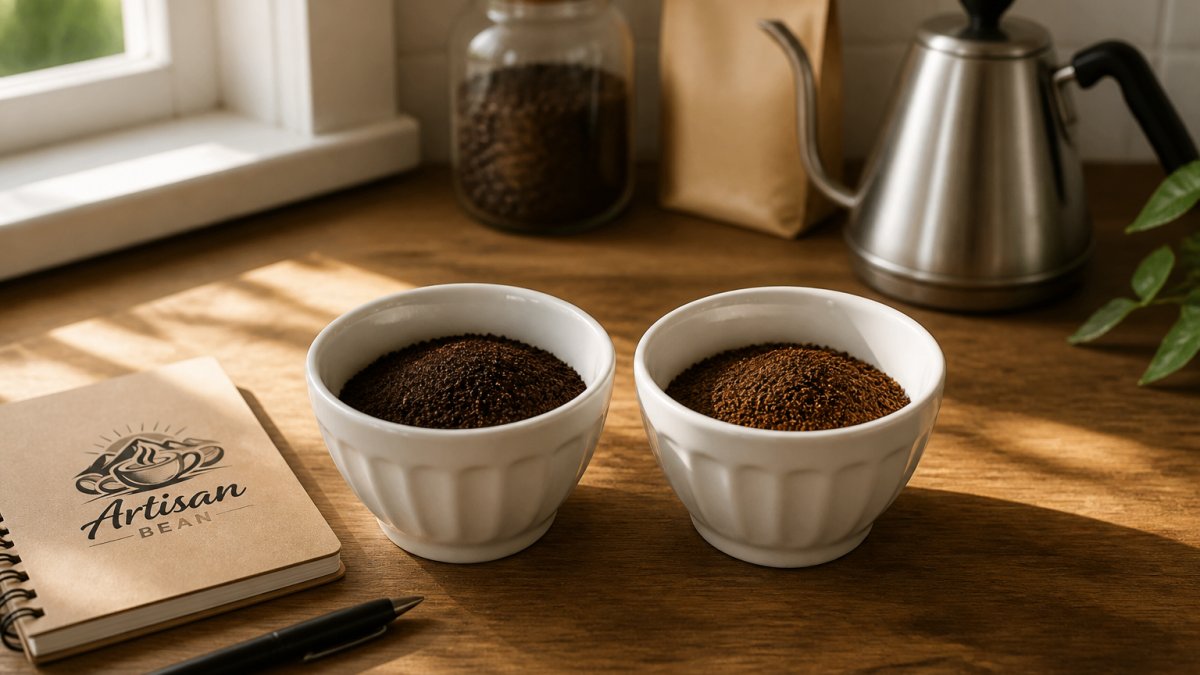
Most people notice the difference in aroma first. Fresh beans fill the room when you grind them. Stale beans smell faint and papery, and that faintness carries straight into the cup.
Verdict: Who Should Buy Fresh Roasted Coffee (And Who Can Skip It)
Fresh roasted coffee is worth it for anyone who drinks coffee daily and cares about flavor. The cost-per-cup math, the visible roast date, and the difference in aroma make it a clear win for regular drinkers.
Buy fresh roasted if you:
- Drink coffee most days and notice flavor
- Brew with a pour-over, French press, or espresso machine
- Want origin-specific, complex flavor notes
- Value ethical sourcing and small-farm partnerships
You can skip it if you:
- Drink coffee rarely and won't finish a bag in a month
- Only use instant or heavily flavored drinks
- Genuinely can't taste the difference and don't care to
Our pick for a first bag: the Bali Blue, a medium-dark roast with dark chocolate, molasses, and brown sugar notes. If you prefer a brighter, fruitier cup, the Ethiopia Natural delivers milk chocolate, fruit, and caramel.


Frequently Asked Questions
Is fresh roasted coffee worth the extra cost?
It depends on how much you value flavor. Fresh roasted coffee costs more per bag, but the gap narrows when you calculate cost per cup. A 12-ounce bag at $22.99 is a premium product. Compare that to a $5 cafe latte and the premium looks small. If you drink coffee black and notice flavor differences, the upgrade is usually worth it. If you load your cup with milk and sugar, the difference is harder to justify.
How long do coffee beans stay fresh after roasting?
Whole bean coffee hits peak flavor roughly 5 to 14 days after the roast date and stays good for about 4 to 6 weeks if stored properly. After that, oxidation and degassing gradually flatten the aroma and sweetness. Pre-ground coffee stales much faster, often within 1 to 2 weeks, because more surface area is exposed to air. Check the roast date on the bag, not the best-before date, since best-before dates say nothing about when the coffee was actually roasted.
Can coffee be too fresh after roasting?
Yes. Coffee releases carbon dioxide for several days after roasting, a process called degassing. Brew too soon and the CO2 interferes with water extraction, producing a flat, foamy, or oddly sour cup. Most roasters recommend a resting period of 3 to 7 days for pour-over and drip, and 7 to 14 days for espresso, which needs more time to settle. If your bag arrives still warm from the roaster, give it a few days before you judge the flavor.
What is the best way to store coffee beans to keep them fresh?
Keep whole beans in an airtight, opaque container at room temperature, away from light, heat, and moisture. Do not store beans in the fridge or freezer unless the bag is vacuum-sealed and you plan to use it all at once, since condensation and odors can ruin the flavor. Buy only as much as you will drink in 2 to 4 weeks, and grind right before brewing for the freshest cup.
Does freshly roasted coffee taste different from grocery-store coffee?
Yes, and the difference is most obvious in aroma and sweetness. Fresh roasted beans retain volatile compounds that carry complex flavor notes like fruit, chocolate, and caramel. Grocery-store coffee often sits for months before purchase, so those compounds fade and the cup tastes flat or papery. A side-by-side tasting makes the gap clear: brew the same dose and method with each, let both cool slightly, and compare the smell before the first sip. Most people notice the fresh cup has more distinct layers.
The challenge with most coffee is that you never actually know how old it is. Artisan Bean roasts premium micro-batch beans to order, ships immediately after roasting, and partners directly with sustainable farms, so every bag carries a real roast date and real flavor. If you're ready to taste the difference, join our coffee club and turn your morning cup into a ritual worth savoring.