

Benefits of Micro Batch Coffee Roasting
Table of Contents
- What Micro Batch Coffee Roasting Means for Your Cup
- Small-Batch Coffee vs. Mass-Produced Coffee: Key Differences
- How Roasting Affects Coffee Flavor (and Why Precision Matters)
- Freshly Roasted Coffee Beans: Why Roast Date Changes Everything
- Small Batch Coffee Roasting Benefits: Consistency, Control, and Quality
- The Trade-Offs and Limitations of Micro-Batch Roasting
- How to Choose and Enjoy Micro-Batch Coffee at Home
- Frequently Asked Questions
Last Updated: October 17, 2026
What Micro Batch Coffee Roasting Means for Your Cup
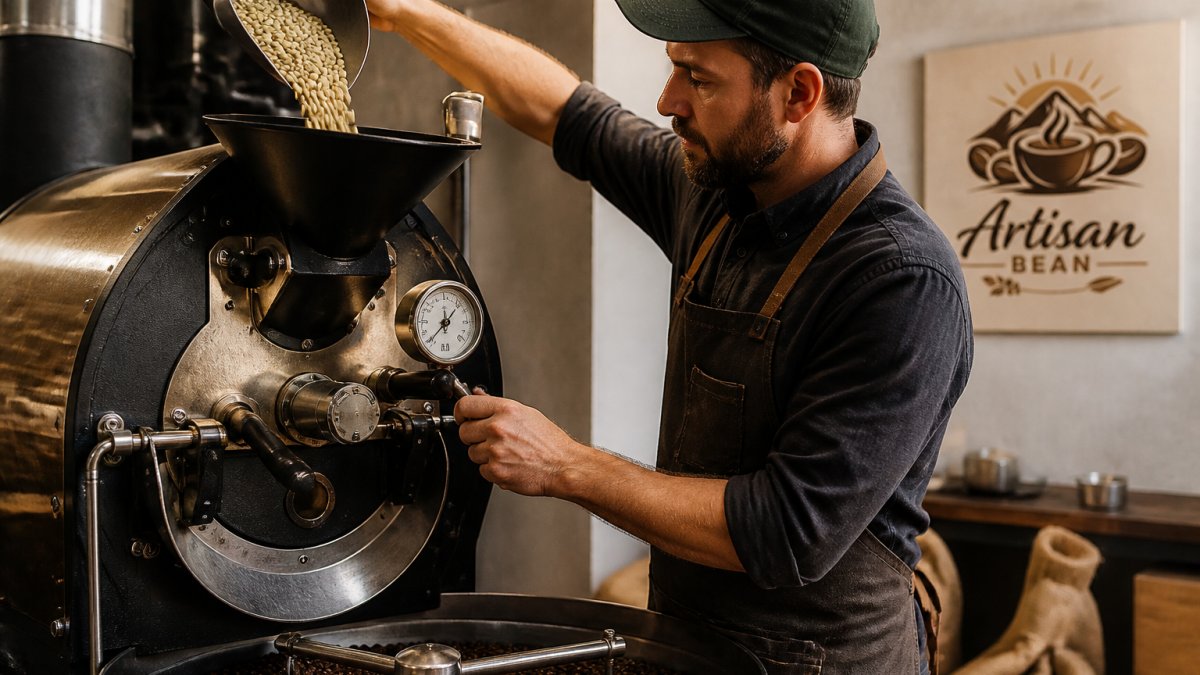
Micro batch coffee roasting is the practice of roasting very small quantities of green coffee beans at a time, typically in batches sized to order rather than for warehouse stock. This approach gives the roastmaster tighter control over temperature and timing, which preserves the distinctive character of each coffee origin.
At Artisan Bean, we built our entire operation around this idea: roast small, roast to order, ship immediately. The result is a cup that tastes the way the roaster intended, not a faded version of it.
The benefits of micro batch coffee roasting start with freshness and ripple outward into flavor, consistency, and sustainability. Below, we break down exactly how it works, where it beats mass production, and where it falls short.
Micro-Batch vs. Small-Batch: The Definition That Matters
The two terms get used interchangeably, but they describe different scales. Micro-batch roasting typically means batches of a few kilograms or less, roasted in direct response to orders. Small-batch roasting is a broader category, often covering batches up to a few dozen kilograms produced for short-term stock.
The practical difference shows up in the roast profile. A micro-batch gives the roaster room to adjust heat application mid-roast, second by second, because there is less thermal mass fighting the changes. A larger small-batch still allows craft, but with less margin for fine adjustment.
If you are buying coffee and want the freshest possible roast date, micro-batch is the tighter guarantee.
Small-Batch Coffee vs. Mass-Produced Coffee: Key Differences
Small-batch coffee differs from mass-produced coffee in three ways: batch size, time from roast to shipment, and how much attention each origin receives. Mass production optimizes for volume and shelf stability. Small-batch roasting optimizes for flavor clarity and freshness.
Here is how the two compare across the variables that actually affect your cup:
| Factor | Small-Batch / Micro-Batch | Mass-Produced |
|---|---|---|
| Batch size | A few kilograms or less | Hundreds of kilograms |
| Roast-to-ship time | Days or less | Weeks to months |
| Profile development | Adjusted per origin | Standardized for consistency |
| Flavor clarity | Origin notes preserved | Muted, uniform |
| Inventory model | Roasted to order | Roasted to warehouse |
The trade-off is obvious once you see it side by side. Mass production wins on price and shelf life. Small-batch wins on everything you taste.
How Roasting Affects Coffee Flavor (and Why Precision Matters)
Roasting affects coffee flavor by transforming green coffee beans through controlled heat, driving the Maillard reaction and caramelization that create aroma and taste. Small changes in temperature and timing shift the final cup dramatically, which is why precision matters more than speed.
A roast that runs slightly too long tips toward bitter, smoky notes. One pulled too early tastes grassy and underdeveloped. The window between the two is narrow, often measured in seconds.
Micro-batch roasting narrows the margin for error because the roaster can respond to what the beans are doing in real time. In practice, this means:
- Temperature control tuned to the specific density and moisture of each origin
- Roast timing adjusted for the bean's development stage, not a fixed schedule
- Heat application modulated to avoid scorching delicate profiles
What most guides miss is that precision is not about perfection for its own sake. It is about protecting the flavor profile the grower and the roaster worked to create.
Freshly Roasted Coffee Beans: Why Roast Date Changes Everything
Freshly roasted coffee beans taste better because the volatile compounds responsible for aroma and flavor are still intact. Those compounds begin fading the moment the beans leave the roaster, and the decline accelerates with exposure to oxygen and time.
This is why roast date matters more than almost any other label on the bag. A bag with a recent roast date, shipped within days, delivers a fundamentally different experience than one that has sat on a shelf. The aroma is louder, the flavor is more complex, and the cup has a liveliness that stale coffee simply cannot match.
For anyone chasing flavor clarity, the roast-to-cup window is the single biggest variable you control. Buy fresh, brew soon, and store the beans properly between cups.
Small Batch Coffee Roasting Benefits: Consistency, Control, and Quality
Small batch coffee roasting benefits fall into three buckets: consistency, control, and quality. Each one compounds on the others, which is why micro-batch operations tend to produce noticeably better coffee than volume-first roasters.
Single Origin Favorites Sample Pack →
- Consistency. Smaller batches behave more predictably. A roaster can repeat a successful profile batch after batch, so the coffee you loved last month tastes the same this month.
- Control. With less thermal mass and shorter roast times, the roaster can make real-time adjustments. That control is what separates a good roast from a great one.
- Quality. Attention to individual beans and origins is possible at small scale in a way it never is at industrial scale. Defects get caught. Origins get treated as distinct, not blended into uniformity.
For specialty coffee drinkers, this is the difference between a coffee that is merely good and one that is genuinely memorable.
The Trade-Offs and Limitations of Micro-Batch Roasting
Micro-batch roasting is not free of downsides, and honest guides should say so. The main limitations fall into four categories: cost structure, equipment and capacity, skill and reproducibility, and the practical friction of buying fresh.
- Higher price per bag, driven by physics, not marketing. Smaller batches mean less efficient use of fuel and labor per kilogram roasted. A roaster that can only roast a few kilograms at a time cannot spread fixed costs (gas, electricity, labor, packaging, shipping) across a large volume, so the per-bag price rises. You are paying for attention and freshness, not volume. Expect micro-batch coffee to cost more per ounce than supermarket or large-scale specialty coffee, and treat that premium as the price of a shorter roast-to-cup window.
- Equipment and capacity constraints. Micro-batch roasting typically happens on drum roasters in the 1-15 kg range. These machines have a lower throughput ceiling than production roasters that handle 60-120 kg or more per batch. A micro-batch roaster cannot serve unlimited demand, and popular origins sell out. Restocks depend on the roasting schedule, green coffee availability, and the roaster's ability to source small lots consistently.
- Skill and reproducibility demands. Smaller batches are less forgiving of mistakes because there is less thermal mass to buffer temperature swings. A roaster must manage charge temperature, airflow, drum speed, and rate of rise (RoR) in real time. Reproducing a profile batch after batch requires careful logging and cupping, not just good intentions. A common pattern is that a roaster nails a profile once, then struggles to repeat it when green coffee moisture or density shifts from lot to lot.
- Shipping dependency and freshness logistics. Because coffee is roasted to order, the freshness advantage depends on fulfillment speed. A slow shipper can erase the benefit entirely. If the roaster ships within days of roasting, you win. If the bag sits in a warehouse for two weeks before it reaches you, the roast date on the label tells the real story.
Where micro-batch roasting falls short is scale. If you need thousands of identical bags for a national retail chain, this is not the model for you. If you want the best possible cup at home, the trade-offs are worth it, provided you understand what you are paying for and how to evaluate freshness.
A balanced view also means acknowledging that smaller batches do not automatically taste better. They give a skilled roaster more control, but control is only an advantage if the roaster knows how to use it. The benefits of micro-batch roasting are real, but they are conditional on execution, not guaranteed by batch size alone.
How to Choose and Enjoy Micro-Batch Coffee at Home
Choosing micro-batch coffee comes down to reading the bag correctly, understanding freshness timelines, and matching quantity to how fast you actually drink. Here is the practical version most guides skip.
1. Read the roast date, not the "best by" date. A roast date tells you when the clock started. A "best by" date tells you nothing useful. As a rule of thumb, coffee is at its peak roughly 4-14 days after roasting for filter methods, and 5-21 days for espresso, depending on the coffee and your taste. Coffee older than 4-6 weeks is not dangerous, but it is past its best. If the bag has no roast date, treat that as a signal the roaster is not prioritizing freshness transparency.
2. Understand resting and degassing. Freshly roasted coffee releases carbon dioxide, which can interfere with extraction. For filter coffee, a short rest of 3-7 days often improves clarity. For espresso, many roasters recommend 5-14 days of rest so the puck behaves predictably. If your coffee tastes flat or gassy right after opening, give it a few more days. This is not a defect; it is chemistry.
3. Check packaging and storage. One-way degassing valves let CO2 escape without letting oxygen in. Look for bags with a valve and a tight seal. Once opened, store beans in an airtight, opaque container away from light, heat, and moisture. Do not refrigerate or freeze unless you are storing sealed bags long-term and know how to thaw them without condensation. Grind immediately before brewing for the fullest aroma.
4. Match quantity to consumption. Micro-batch coffee is best when you buy what you will drink within a few weeks. A common pattern is to order 12 oz to 2 lb at a time, depending on how many cups you brew per day. Buying five pounds of a light roast you drink once a week means the last bag will be stale before you finish it. If you want variety, smaller bags from multiple origins beat one large bag of a single coffee.
5. Verify the roaster actually roasts to order. Look for language like "roasted to order," "ships within 24-48 hours of roasting," or a visible roast schedule. If the roaster cannot tell you when your coffee was roasted, assume it was not recent.
- Confirm the bag lists an actual roast date, not just a "best by"
- Check that the origin is named, ideally with the farm or region
- Verify the roaster ships within days of roasting, not weeks
- Match the roast level to your brew method (medium for filter, darker for espresso)
- Store beans in an airtight container away from light and heat
- Grind immediately before brewing for the fullest aroma
- Buy quantities you will finish within 3-4 weeks of the roast date
If you want a starting point, our Single Origin Favorites Sample Pack includes six 2oz packs spanning Brazil, Colombia, Costa Rica, Ethiopia, Honduras, and Tanzania, so you can taste how origin and roast level change the cup before committing to a full bag. For a single standout, the Ethiopia Natural delivers milk chocolate, fruity, and caramel notes from smallholder farms in the Sidama zone.


Frequently Asked Questions
What is micro-batch coffee roasting?
Micro-batch coffee roasting means roasting very small quantities of coffee at a time, usually under 10 kilograms. This lets the roastmaster adjust temperature and timing for each batch, bringing out the best flavors in the beans. Unlike large commercial roasters that roast hundreds of kilos at once, micro-batch roasting treats every batch as its own project. The result is fresher, more consistent coffee with clearer flavor notes. Artisan Bean roasts in micro-batches to order, so your beans arrive days after roasting, not months.
What are the benefits of micro-batch coffee roasting?
The main benefits of micro batch coffee roasting include fresher beans, better flavor clarity, and more control over the roast profile. Because batches are small, the roaster can fine-tune temperature and timing to highlight each origin's unique characteristics. This leads to a more consistent cup and less waste. You also get coffee that's roasted to order, so it reaches you at peak freshness. For home baristas, that means a tastier, more aromatic daily brew without the staleness of mass-produced coffee.
How does small-batch roasting affect coffee flavor?
Small-batch roasting affects coffee flavor by allowing precise control over the roast curve. The roaster can adjust heat and airflow to develop sugars and acids that create complex notes like chocolate, fruit, or caramel. In large batches, it's harder to achieve this precision. Small-batch roasting also reduces the risk of scorching or baking the beans. As a result, you taste the coffee's origin more clearly. For example, a medium roast Ethiopian bean might show milk chocolate and fruity notes, while a Brazilian bean offers smooth cocoa.
Is micro-batch coffee fresher than mass-produced coffee?
Yes, micro-batch coffee is generally much fresher than mass-produced coffee. Mass-produced beans often sit in warehouses and on store shelves for weeks or months before you buy them. Micro-batch roasters like Artisan Bean roast to order and ship immediately, so the coffee reaches you within days of roasting. You can check the roast date on the bag. Freshly roasted coffee beans have a more vibrant aroma and flavor. After about 4 to 6 weeks, coffee starts to lose its best qualities, so fresher is better.
How can you tell if coffee beans are freshly roasted?
The best way to tell if coffee beans are freshly roasted is to look for a roast date on the bag, not just a best-by date. A recent roast date, ideally within the last 1-2 weeks, indicates freshness. Fresh beans also smell intensely aromatic and may have a slight sheen of oil (depending on roast level). When you open the bag, you might hear a crackling sound as gases escape. If the beans smell flat or look dry, they're likely older. Always buy from roasters who print the roast date clearly.
Is small-batch coffee worth the extra cost?
For many coffee lovers, small-batch coffee is worth the extra cost because the flavor difference is noticeable. Higher prices reflect better sourcing, more labor-intensive roasting, and fresher shipping. If you drink coffee daily and appreciate complex flavors, the upgrade can transform your morning ritual. Artisan Bean's single-origin coffees start at $22.99, which is more than grocery store beans but delivers a fresher, more enjoyable cup. It's a small luxury that pays off in taste and experience.
The hardest part of great coffee at home is not technique. It is getting beans that were roasted recently enough to matter. Artisan Bean roasts in micro-batches to order and ships right after, so the coffee you brew is the coffee the roaster intended. Our direct partnerships with sustainable farms, fast fulfillment, and freshness guaranteed by immediate shipping make it simple to turn a daily cup into a daily ritual. Join Our Coffee Club and taste what fresh-roasted actually means.