

7 Reasons Your Coffee Tastes Like Soil (And How to Fix It)
Last Updated: November 2, 2026
Quick Summary
Yes, you can taste soil in coffee, but what reaches your cup is terroir: the mineral, earthy character a plant pulls from the ground it grew in. Earthy is a tasting note that sits alongside sweetness, while a muddy, musty or cardboard taste is usually a defect from staleness, storage or brewing.
- Earthy origin notes read as forest floor, dark cocoa and molasses with sweetness behind them.
- Defects taste of wet cardboard, damp basement or a flat, hollow finish with nothing sweet.
- Overextraction drags out bitter, woody and dirt-like compounds, so try a coarser grind and shorter brew.
- Store beans in an airtight container away from light and heat, and clean your grinder weekly.
- Switch to a fresh-roasted single origin last, after ruling out beans, extraction, water and equipment.
Table of Contents
- Can You Actually Taste Soil in Coffee Beans?
- Why Does Coffee Taste Like Dirt? Separating Earthy Notes From Defects
- How Soil Affects Coffee Flavor, From Volcanic Loam to Mineral Content
- The Stale Coffee Taste That Masks as Muddy or Musty
- Brewing Problems That Make Coffee Taste Earthy
- How to Improve Coffee Taste: A Troubleshooting Flow
- Choosing a Fresh-Roasted Bean for a Cleaner Cup
- Frequently Asked Questions
Can You Actually Taste Soil in Coffee Beans?
Yes, you can taste soil in coffee beans, but not the way the phrase suggests. What reaches your cup is terroir: the mineral, earthy character a plant pulls from the ground it grew in. The 2025 research published in Scientific Reports on coffee flavor and soil bacterial communities links coffee management systems and soil biology to distinct flavor profiles. At Artisan Bean, we roast to order in small batches, so the earthy notes you taste are the ones the farm put there, not the flat staleness of a bag that sat on a shelf for months.
Here is the distinction most guides skip. Earthy is a tasting note. Dirt-like is usually a defect. Below, we break down which is which, what soil really does to flavor, and how to fix a cup that tastes like a wet garden.
The Short Answer: Terroir, Not Dirt
Terroir is the unique sensory experience of a single-origin roasted coffee that reflects its source, according to the 2022 review by S. D. Williams and colleagues on coffee terroir. You are tasting minerals, not mud.
So when you ask can you taste soil in coffee beans, the honest answer is yes, as a flavor signature. A muddy, musty, cardboard taste is a different problem entirely, and we will get to it.
Why Does Coffee Taste Like Dirt? Separating Earthy Notes From Defects
Coffee tastes like dirt for one of two reasons: the bean carries a genuine earthy note from its origin and roast, or something went wrong after roasting. Learning to tell them apart saves you from throwing out good coffee.
Earthy notes from a clean bean read as pleasant:
- Forest floor or cedar
- Dark cocoa and molasses
- Dried fruit and a syrupy body
Defects read as unpleasant:
- Wet cardboard or damp basement
- Musty, dusty, or moldy
- A flat, hollow finish
Here is the practical test. Earthy origin notes sit alongside sweetness. Defects sit alone. If the cup tastes muddy with nothing sweet behind it, the problem is freshness, storage, or brewing, not the farm.
How Soil Affects Coffee Flavor, From Volcanic Loam to Mineral Content
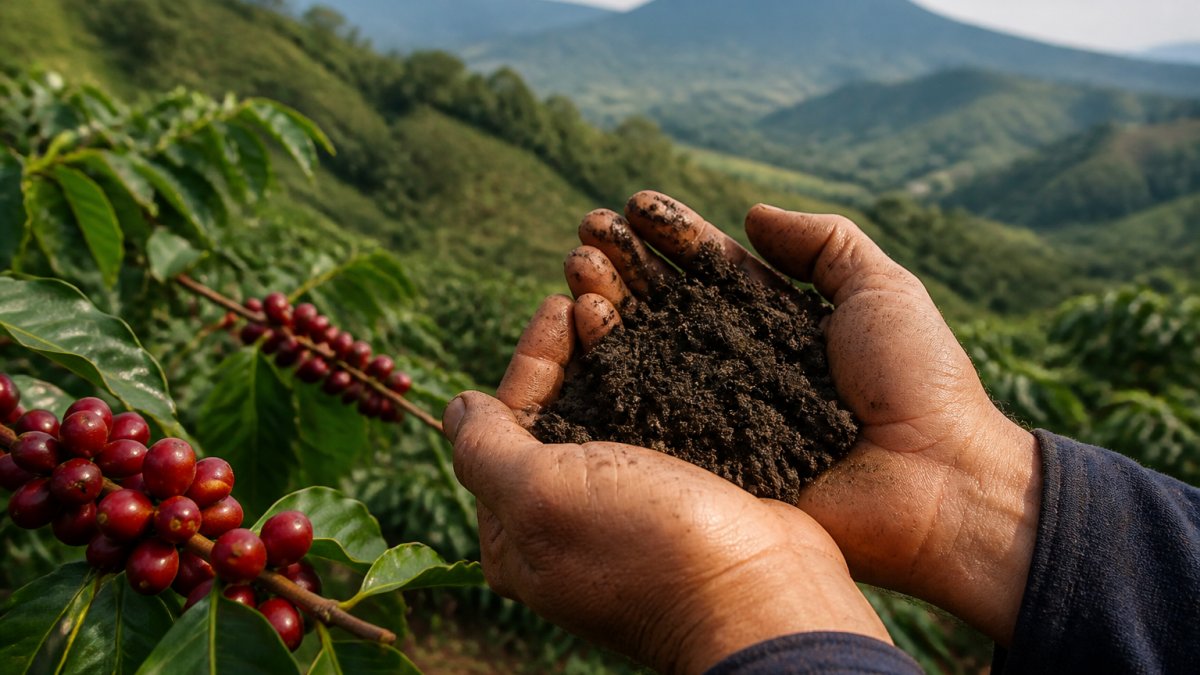
Soil affects coffee flavor indirectly, by feeding the plant that builds the fruit.
Here is the chain in plain terms:
- Soil structure and drainage decide how much water and oxygen reach the roots.
- Nutrient availability (nitrogen, potassium, phosphorus, calcium, magnesium) shapes leaf health, cherry development, and the balance of sugars and acids.
- Root depth and health determine how well the plant handles dry spells and stress.
- Cherry development sets the density and chemistry of the bean inside.
- Processing and roasting translate that chemistry into the flavors you actually taste. Our guide on how to choose natural vs washed coffee beans explains how the processing method shapes earthy notes.
Our Bali Blue grows in volcanic loam at 1,200 to 1,600 meters, and it tastes of dark chocolate, molasses, and brown sugar.

Mineral content, water availability, and root development all feed the same chain. Healthy roots and steady water mean a fully developed cherry. Stressed plants give thin, flat cups. A common pattern among growers is that soils with good organic matter and steady moisture produce more consistent cherry ripening, which shows up later as clearer sweetness in the cup.
Altitude, Climate, and Root Development
Altitude and local climate slow the ripening process, and slower ripening builds denser flavor. Cool nights and warm days push sugars into the cherry. Steady rainfall keeps roots working.
The Stale Coffee Taste That Masks as Muddy or Musty
The most common cause of dirt-like coffee is not soil at all. It is staleness, and it hides behind earthy language all the time.
Oxygen, heat, light, and time break down the coffee compounds that create bright, sweet flavor. What is left reads as flat, papery, or musty. Many drinkers describe it as muddy.
If your beans came from a grocery shelf with no clear roast date, suspect staleness first. Our guide on how to tell if coffee beans are stale gives you a seven-sign checklist to confirm it. For the full explanation of why it happens and how to store beans well, read why coffee tastes stale and how to keep it fresh.
Fresh-roasted beans are the focus of how we roast to order.
Brewing Problems That Make Coffee Taste Earthy
Brewing mistakes pull earthy and muddy flavors forward even from good beans. The usual suspects are overextraction and uneven extraction.
Fix the basics:
- Grind size: coarser for longer brews, finer for short ones
- Water temperature: just off the boil, not rolling
- Brew time: follow your method, then adjust in small steps
- Coffee-to-water ratio: weigh it, do not eyeball it
- Water quality: filtered water beats hard tap water
Change one variable at a time. If the muddy taste fades as you dial in grind and time, the beans were fine all along.
How to Improve Coffee Taste: A Troubleshooting Flow
Improving coffee taste starts with a simple order of operations. Work through these steps from cheapest to most expensive, and you will find the culprit fast. This is the practical diagnostic flow most guides skip: instead of guessing, you isolate one variable at a time.
Step 1: Rule out the beans
Smell the dry grounds. Faint aroma points to stale beans. Check the roast date. No date, or a date months back, means replace the bag. If the beans are fresh and aromatic, move on.
Step 2: Taste a small cup black
Brew a small, simple cup and taste it without milk or sugar. Sweet with earth in the background is terroir. Flat and musty is a defect. This single test tells you whether to keep diagnosing or enjoy the cup.
Step 3: Isolate grind and extraction
Change one variable at a time. Adjust grind size one notch, rebrew, and compare. Then lower water temperature slightly and rebrew again. If the muddy taste fades as you dial in grind and time, the beans were fine all along. Overextraction drags out bitter, woody, and dirt-like compounds, so coarser grind and shorter brew time are the first fixes to try.
Step 4: Check water and equipment
Filtered water beats hard tap water. Clean your grinder and brewer. Old oils and residue turn rancid and taste muddy. A quick clean is often the fastest fix for a cup that suddenly tastes off.
Step 5: Switch beans last
If nothing else worked, the bean was the problem. Switch to a fresh-roasted single origin and compare.
| Symptom | Likely Cause | Fix | Effort |
|---|---|---|---|
| Earthy note with sweetness | Origin terroir | Enjoy it, or pick a brighter origin | None |
| Flat, musty, cardboard | Stale beans | Buy fresh-roasted, check roast date | Low |
| Bitter, woody, dirt-like | Overextraction | Coarser grind, shorter brew | Low |
| Sour and muddy at once | Uneven extraction | Better grinder, stir the bed | Medium |
| Rancid, oily aftertaste | Dirty equipment | Clean grinder and brewer | Low |
Storage and Equipment Hygiene
Store beans in an airtight container, away from light and heat, and grind just before brewing. If you are wondering whether the freezer helps, our guide on whether coffee beans can freeze covers when it works and how to avoid moisture.
Clean your grinder weekly. Old oils go rancid and coat every fresh dose.
Choosing a Fresh-Roasted Bean for a Cleaner Cup
The cleanest fix for muddy coffee is a bean roasted recently and shipped fast. Freshness removes the defect, and origin gives you the earthy note you actually want.
At Artisan Bean, we roast in micro-batches to order and ship right after roasting. Our Sumatra offers medium acidity, a syrupy body, dark chocolate, dried fruit, and a long, lingering finish.
If you want a brighter, fruit-forward cup instead, our Guatemala brings dark chocolate, bright fruit, and butterscotch.
The choice comes down to the flavor you want, not guesswork. Start with a single origin, note what you taste, and adjust from there.
Frequently Asked Questions
Can coffee beans taste like soil?
Yes, but not because beans absorb dirt. Coffee terroir is the unique sensory experience of a single-origin roasted coffee. An earthy note in a Sumatra or Bali Blue is a signature, not a flaw. The problem starts when that earthy quality turns muddy, musty, or flat, which usually points to staleness or brewing errors rather than the soil itself.
Why does my coffee taste like dirt instead of the flavor notes on the bag?
Three culprits cause most dirt-like cups. First, stale beans: oxygen and time flatten bright acids and leave a muddy, papery taste. Second, overextraction from too fine a grind or too long a brew time can make a cup taste bitter. Third, dirty equipment, especially a grinder or brewer with old oils. Try a fresher bag with a known roast date, then adjust grind size and water temperature before blaming the origin.
How does soil affect coffee flavor?
Soil composition influences how coffee plants take up nutrients, which shapes fruit development and the compounds that end up in the cup. Volcanic loam, like the soil in Kintamani, Bali, drains well and holds minerals that support slow, even ripening at 1,200 to 1,600 metres.
How can I improve coffee taste if it's too earthy or muddy?
Work through four steps. Check the roast date and switch to freshly roasted beans if yours are more than a few weeks old. Clean your grinder and brewer to remove stale oils. If the cup is still muddy, coarsen the grind slightly. Artisan Bean's Guatemala, with dark chocolate and butterscotch notes, is one coffee to test against.
Can you taste soil in coffee beans? Yes, and you should be able to, as long as it is terroir and not a stale bag talking. If your morning cup keeps tasting muddy, the bean is the first thing to change. Artisan Bean roasts in small batches to order, ships immediately after roasting, and partners directly with sustainable farms, so the earthy notes you taste are the ones the farm intended. Get started with Artisan Bean and taste what fresh-roasted really means.
