

How to Choose Natural vs Washed Coffee Beans
Last Updated: November 1, 2026
Quick Summary
Natural process coffee dries the whole cherry with the fruit still attached, while washed coffee strips the fruit off first and then dries the bare bean. That single decision changes flavor, shelf life, water use, and defect risk, making it the biggest fork in the road after picking.
- Natural processing dries whole cherries on raised beds for roughly two to four weeks.
- Washed beans ferment in tanks for hours to a few days before rinsing.
- Washed processing uses substantially more water for depulping, washing, and channel rinsing.
- Natural processing carries a higher defect risk from mold, rot, and uneven drying.
- Grind naturals slightly coarser and washed coffees a touch finer when brewing.
Table of Contents
- Natural Process vs Washed Coffee Beans: The Core Difference
- A Side-by-Side Process Timeline
- Coffee Processing Methods Beyond Natural and Washed
- What Natural Process Coffee Taste Is Really Like
- What Washed Coffee Taste Tells You About the Bean
- How Origin, Variety, and Roast Change the Flavor
- Quality Control, Defect Risk, and Resource Trade-Offs
- Brewing Natural and Washed Beans at Home
- Frequently Asked Questions
Natural Process vs Washed Coffee Beans: The Core Difference
The difference between natural process vs washed coffee beans comes down to one thing: how the fruit is removed from the seed. Natural process coffee dries the whole cherry with the fruit still attached.
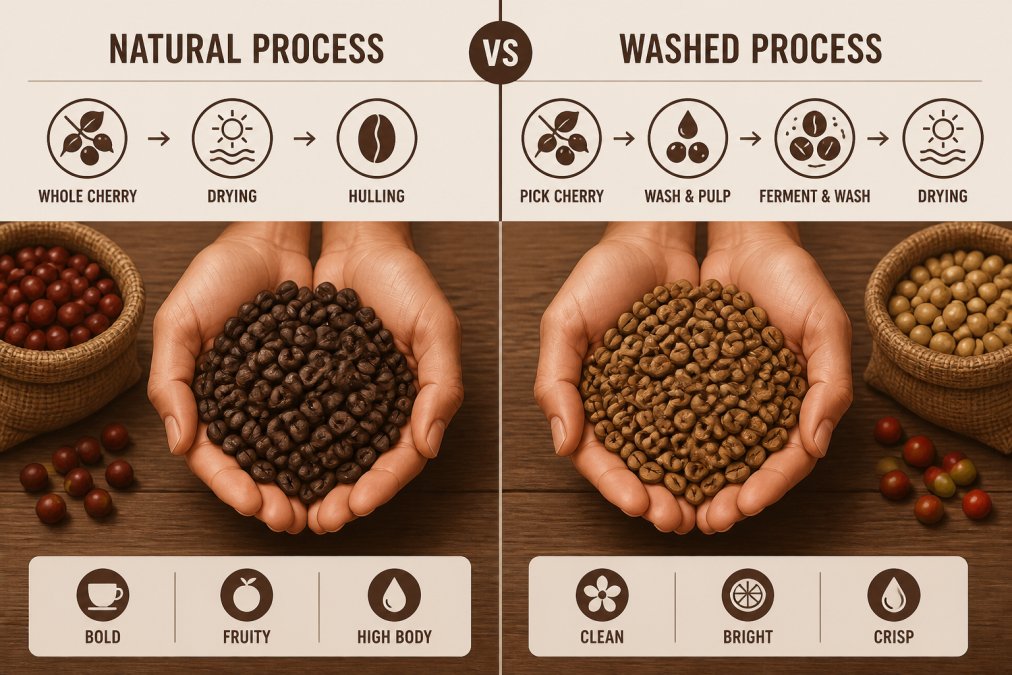
That single decision changes flavor, shelf life, water use, and defect risk. It's the biggest fork in the road after picking.
Freshness is what lets you actually taste the difference between processing styles, because processing character fades fast once a bag sits on a shelf.
Here's the trap most guides fall into: they describe natural as "fruity" and washed as "clean" and stop there. That shorthand is a starting point, not a rule. Processing sets a direction.
Below, we break down both methods step by step, compare them side by side, and show you how to brew each one so the cup matches the bag.
How Natural Processing Works
Natural processing, also called the dry process, is the oldest method. Pickers harvest ripe coffee cherries and spread them on raised beds in the sun.
The whole fruit stays on the seed. Workers turn the cherries by hand so they dry evenly. This takes roughly two to four weeks, depending on weather.
During drying, the fruit ferments slowly around the bean. Sugars and fruit compounds soak inward. That's where the heavy sweetness and berry notes come from.
Once moisture drops to a safe level, machines hull off the dried fruit and skin. The green coffee is then sorted and bagged.
Watch out: rain during drying can spoil an entire lot.
How Washed Processing Works
Washed processing, or the wet process, removes the fruit before drying. Harvested cherries go through a depulping machine that strips the skin and most of the pulp.
The beans, still coated in sticky mucilage, drop into fermentation tanks. There they sit for hours to a few days while microbes break down the mucilage.
Next comes the washing channel. Clean water rinses the beans until the surface is slick-free and bare.
The beans then dry on raised beds or patios, usually faster than naturals because there's no fruit left to dry. Total drying runs about one to two weeks.
A Side-by-Side Process Timeline
Most comparisons stop at "naturals take longer." That's true, but it hides the stages where the two methods actually diverge, and where a lot can go right or wrong. Here's the full timeline, stage by stage, with typical durations and the points where practices vary.
| Stage | Natural Process | Washed Process |
|---|---|---|
| Harvest | Ripe cherries picked, often selectively by hand | Ripe cherries picked, often selectively by hand |
| Fruit removal | None, whole cherry stays intact | Depulped within hours of picking (mechanical or hand-pulper) |
| Fermentation | Slow, inside the drying fruit over 2-4 weeks | Controlled in tanks, typically 12-72 hours depending on temperature and producer |
| Washing | Not applicable | Rinsed in channels or tanks until mucilage is gone |
| Drying method | Whole cherry on raised beds, patios, or mechanical dryers | Bare bean on raised beds, patios, or mechanical dryers |
| Drying time | Roughly 2-4 weeks (sun-dependent) | Roughly 1-2 weeks |
| Target moisture | ~10-12% before hulling | ~10-12% before resting and milling |
| Water use | Minimal, mostly for equipment cleaning | Substantial, depulping, washing, and channel rinsing |
| Main risk | Mold, rot, and uneven drying from rain or high humidity | Over-fermentation, vinegar notes, and water-quality issues |
| Final step | Hull dried fruit and skin, then sort | Rest, hull, then sort |
Where practices vary: In Ethiopia, naturals are often dried on raised beds under shade cloth for slower, more even drying. In Brazil, patio drying and mechanical dryers are common for both methods.
Why the timeline matters for buyers: A natural that dried too fast can taste flat and papery; one that dried too slow in humid conditions risks mold. A washed coffee fermented too long develops vinegar or medicinal notes that no roast can fix.
Coffee Processing Methods Beyond Natural and Washed
Natural and washed aren't the only options. The honey process sits between them. Producers remove the skin but leave some mucilage on the bean during drying.
Less mucilage means less fruit intensity. More mucilage means more sweetness. Roasters tune it by degrees.
Anaerobic fermentation is the newer wave. Beans ferment in sealed tanks without oxygen, which pushes toward bold, wine-like flavors.
Carbonic maceration borrows from winemaking. Whole cherries sit in a pressurized tank filled with carbon dioxide.
A 2024 study on processing methods indexed by PubMed Central examined how natural, washed, honey, anaerobic, and carbonic maceration methods affect coffee. It's a useful reminder that processing is a spectrum, not a binary.
For a home brewer, the practical takeaway is simple: if you like naturals, try a honey process next. It's the gentlest step toward fruit.
What Natural Process Coffee Taste Is Really Like
Natural process coffee taste is bold, sweet, and fruit-forward. Expect berry, stone fruit, and sometimes a wine-like depth. The body runs heavier, with a syrupy mouthfeel.
Aroma leans toward strawberry jam, dried fruit, and cocoa. The aftertaste lingers.
But here's what most guides miss: natural processing carries a higher defect risk. Nossa Coffee's comparison of washed and natural coffee notes that naturals are more prone to defects, though a well-executed lot can be stunning.
That means quality varies more. A great natural is unforgettable. A careless one tastes fermented or muddy.
If you want to taste the style done right, our Ethiopia Natural is a full natural from the Sidama zone, dried on raised beds and sorted by hand. It shows milk chocolate, caramel, and fruit in the same cup. We explain it in why Ethiopian coffee tastes like fruit.

What Washed Coffee Taste Tells You About the Bean
Washed coffee taste is clean, bright, and precise. You get clarity first: citrus, floral notes, and a crisp acidity. The finish is clean and the body lighter.
Nothing hides behind fruit. A flaw in the bean shows up in the cup.
Washed coffee is the better choice when you want to taste where a bean came from, not what the process added.
The trade-off is real, though. Some drinkers find washed coffees thin or sharp, especially at lighter roasts. If you crave sweetness and weight, a washed bean may leave you cold.
How Origin, Variety, and Roast Change the Flavor
Processing sets the direction, but three other factors decide how far it goes.
- Origin: Ethiopian beans lean floral and fruity. Brazilian beans lean nutty and sweet.
- Variety: Heirloom cultivars bring complexity. Bourbon brings round sweetness.
- Roast level: Light roasts preserve acidity and origin character. Dark roasts push toward chocolate and smoke.
This is where the "natural equals fruity" shorthand breaks down. A dark-roasted natural tastes more like dark chocolate than berries. A light-roasted washed Ethiopian can be wildly floral.
So match roast to process. Light and medium-light roasts flatter washed beans. Naturals can handle medium and medium-dark without losing their character.
If you're comparing origins, our guide to the top coffee bean origins for fruit notes gives you a shortlist to taste side by side. And if you're still deciding how dark to go, our guide on how to choose a coffee roast profile walks through the trade-offs.
Quality Control, Defect Risk, and Resource Trade-Offs
Quality control is where the two methods diverge most sharply, and where the environmental bill comes due. Neither is "better" across the board; each trades one kind of risk for another.
Natural process defect risks: Because the whole fruit stays on the bean for weeks, naturals are vulnerable to mold, rot, and uneven drying. Overripe or damaged cherries ferment too fast and produce phenolic, medicinal, or muddy flavors.
Washed process defect risks: Washed coffees face a different set of problems. Over-fermentation in the tank produces vinegar, acetone, or sour notes that no roast can fix. Under-fermentation leaves mucilage that clogs drying beds and causes uneven moisture.
Resource trade-offs: Washed processing uses substantially more water, for depulping, washing, and channel rinsing, and produces wastewater that must be managed to avoid contaminating local streams.
What this means for buyers: A great natural is a high-wire act, stunning when executed well, disappointing when rushed. A washed coffee is more forgiving to produce but can taste thin or sharp if over-fermented or under-roasted. Ask about defect sorting, drying method, and water management. Those details tell you more about quality than the process name alone.
Brewing Natural and Washed Beans at Home
Brew each style differently. Treating them the same wastes what you paid for.
For naturals:
- Grind slightly coarser to slow extraction
- Use water just off the boil
- Expect a heavier cup; don't dilute it
For washed coffees:
- Grind a touch finer
- Keep water temperature steady
- Taste for clarity; stop before bitterness creeps in
A common mistake is brewing a natural like a washed bean and calling it muddy. The fruit isn't a flaw. Your recipe is fighting it.
Freshness matters more than any brewing tweak. Stale beans taste flat no matter the process. That's why Artisan Bean roasts to order and ships right after roasting. If you're building a home setup, our guide to the best coffee beans for home brewing covers gear and bean choices.
Frequently Asked Questions
What is the difference between natural and washed coffee beans?
Natural process beans dry inside the whole coffee cherry, so the fruit sugars and mucilage stay on the seed during drying. Washed process beans have the pulp and mucilage removed before drying, so the seed dries clean. That single choice changes the cup: natural coffees tend to show heavier body and fruit-forward sweetness, while washed coffees come out brighter and clearer. Neither method is better on its own; the difference is what each one lets you taste.
Do natural process coffee beans taste fruitier than washed beans?
Usually yes, because the fruit layer stays in contact with the seed during drying. Expect berry, stone fruit, or tropical notes and a rounder body. Washed coffee taste leans the other way: citrus, floral, and tea-like notes with a clean finish. That said, origin, variety, and roast level all shift the result. A light-roasted washed Ethiopian can taste more floral and fruity than a dark-roasted natural from another region, so treat the shorthand as a starting point, not a rule.
Does coffee processing affect acidity and body?
It affects both, though not in a fixed way. Washed coffees often read as brighter and more acidic because the clean seed lets origin character come through, and the body is usually lighter. Natural coffees typically have lower perceived acidity and a fuller, syrupy mouthfeel from the retained fruit sugars. Roast level and brewing method can push either one further, so taste the same coffee at two brew ratios before deciding which profile you prefer.
Which coffee processing method is better for espresso?
Natural process beans are easier to pull as espresso because their sweetness and body hold up against milk and high pressure. Washed beans can taste sharp or thin as espresso if the roast is very light, but they shine as filter coffee where clarity matters. A practical approach: keep a natural for milk drinks and a washed for pour-over, then swap them to see which you reach for more often.
Choosing between natural and washed coffee beans is a decision you can now make with confidence, not guesswork. At Artisan Bean, we roast both styles in micro-batches to order and ship immediately after roasting, so the fruit or the clarity arrives intact. Every bag carries a real roast date, comes from direct partnerships with sustainable farms, and lands at your door fresh. Get started with Artisan Bean and taste the difference processing makes in your daily ritual.
