

Small Batch Coffee Roasters Near Me: Fresh Picks for 2026
Table of Contents
- What 'Small Batch Coffee Roasters Near Me' Really Means in 2026
- Quick Comparison: Micro-Batch Coffee Options and Pricing
- The Benefits of Micro-Batch Coffee for Your Daily Ritual
- Freshness of Coffee Beans vs Grocery Store: Why Roast Date Matters
- What Is the 15-15-15 Coffee Rule? A Simple Freshness Check
- How to Choose Small Batch Coffee Roasters Near Me: 5 Criteria That Matter
- Cost Per Cup and Seasonal Availability: What Competitors Skip
- Conclusion
- Frequently Asked Questions
Last Updated: September 25, 2026
What 'Small Batch Coffee Roasters Near Me' Really Means in 2026
Searching for small batch coffee roasters near me returns a very different result set than it did five years ago. The phrase no longer describes a physical storefront within walking distance. It now points to roasters who roast to order in micro-batches and ship directly to your door, often within 24 hours of roasting. This guide from Artisan Bean breaks down what that shift means for your morning cup.
Small batch coffee is coffee roasted in limited quantities, typically to order, so the beans reach you within days of roasting rather than months. The distinction matters because freshness drives flavor, and flavor fades fast.
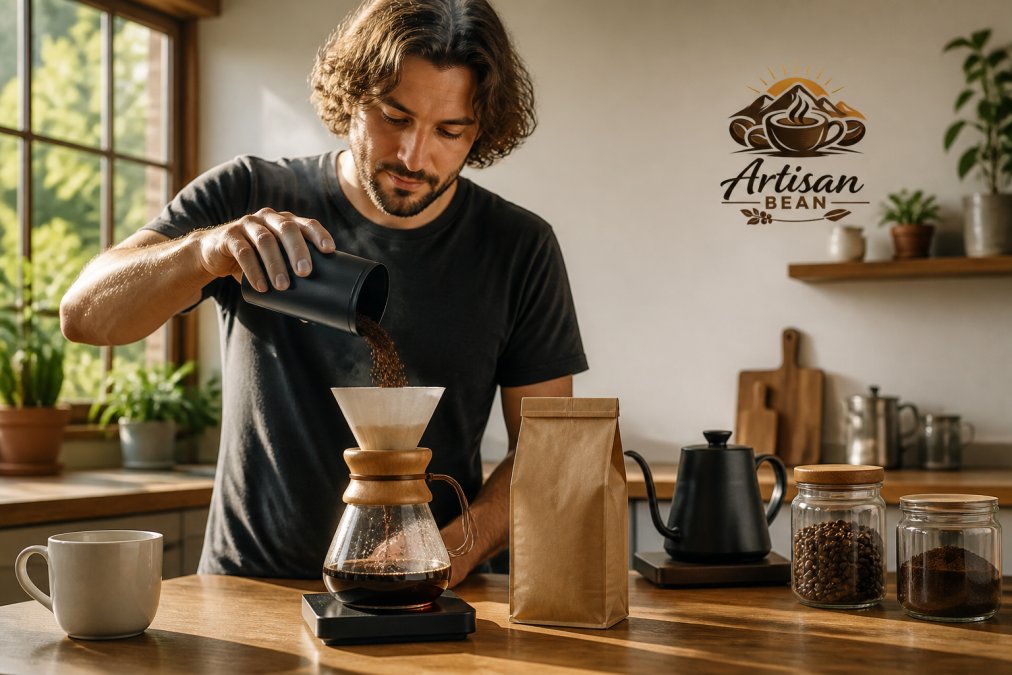
The old model was simple: roast a large volume, distribute it through grocery channels, and hope it sells before the oils go flat. The new model flips that. A micro-batch roaster waits for your order, roasts a small quantity, and ships it immediately.
That change in sequence is the whole story. Everything else, the flavor, the aroma, the ritual, follows from it.
What Actually Counts as "Small Batch"
There is no single legal definition, but the working standard in the specialty coffee trade is a roast batch of roughly 12 to 30 kilograms on a commercial drum roaster, or a few kilograms on a sample or shop roaster. Below that range, the roaster can control the roast curve closely enough to adjust for the day's bean moisture and density. Above it, the batch behaves more like a commodity roast: the operator manages volume, not nuance.
The practical test for you as a buyer is not the batch weight on the spec sheet. It is whether the roaster can tell you the roast date, the origin, and the roast level for the specific bag in your hand. If they can, they are running small batch in the way that matters.
Drum Roasting vs. Air Roasting: The Mechanism Behind the Flavor
Most small-batch roasters use one of two machine types, and the choice shapes what ends up in your cup.
- Drum roasting. Beans tumble inside a heated metal drum. Heat transfers by contact with the drum wall and by convection from the hot air inside. Drum roasts tend to develop heavier body and deeper caramelized sweetness, which is why many espresso-focused roasters prefer them.
- Air roasting (fluid-bed). Beans are suspended in a stream of hot air. Heat transfer is almost entirely convective, so the roast is faster and more even. Air roasts often show brighter acidity and cleaner, more origin-forward flavor notes.
Neither method is better.
Why the "Near Me" Part Still Matters
The shift to ship-direct does not erase geography. A roaster within a day's ground shipping of your address can get beans to you faster than one across the country, which extends the window you have to brew at peak flavor. When you search small batch coffee roasters near me, you are really searching for the shortest possible distance between the roaster's cooling tray and your grinder.
Quick Comparison: Micro-Batch Coffee Options and Pricing
Here is how Artisan Bean's micro-batch options compare across format, price, and best use. Every option is roasted to order and ships free within the US.
| Product | Format | Price | Best For |
|---|---|---|---|
| Trip Around The World Coffee Club | 1 lb monthly, rotating origin | $25.00 | Explorers who want variety |
| Flavored Coffee Discovery Coffee Club | 1 lb monthly, natural flavor | $25.00 | Flavored coffee fans |
| Best Sellers Sample Pack | Six 2 oz packs | $27.99 | First-time buyers |
| Single Origin Favorites Sample Pack | Six 2 oz packs | $27.99 | Origin comparison |
| Bali Blue | 1 lb single origin | $22.99 | Dark chocolate notes |
| Ethiopia Natural | 1 lb single origin | $22.99 | Fruit-forward cups |
The Benefits of Micro-Batch Coffee for Your Daily Ritual
The benefits of micro-batch coffee come down to three things: fresher beans, more traceable sourcing, and a cup that actually tastes like what the roaster intended. But the reasons behind each one are more concrete than most buying guides let on.

Fresher Beans, and Why That Changes Extraction
Freshly-roasted beans retain volatile aromatic compounds that fade with time. A micro-batch roaster ships within days of roasting, so those compounds are still intact when the bag reaches your kitchen. The result is a more complex flavor profile, brighter acidity, and a fuller body.
Traceable Sourcing You Can Actually Verify
Traceability in small batch is not a slogan. It is a paper trail. A roaster working in micro-batches typically buys smaller lots from a single farm, cooperative, or washing station, which means they can name the producer and the region on the bag. Artisan Bean, for example, lists growers like the smallholder farmers of Kintamani in Bali and the Sidama zone in Ethiopia.
A Cup That Tastes Like the Roaster Intended
When a roaster works in small batches, they can taste the result and adjust. A large-volume roaster cannot. The practical effect for you is that the flavor notes printed on the bag, whether dark chocolate, stone fruit, or citrus, are more likely to show up in your cup, provided you brew within the freshness window and match your grind to the roast level.
The Ritual, and the Cost-Per-Cup Reality
There is a ritual dimension too. Grinding fresh beans fills the kitchen with aroma. That small moment anchors the morning before the day takes over. Many home baristas find the process itself becomes part of the pleasure.
Freshness of Coffee Beans vs Grocery Store: Why Roast Date Matters
The freshness of coffee beans vs grocery store alternatives is not a close contest. Grocery coffee often sits in a warehouse or on a shelf for weeks or months before purchase. By the time it reaches your mug, much of the vibrancy is gone.
What Is the 15-15-15 Coffee Rule? A Simple Freshness Check
It is a practical shorthand rather than a strict law. The first 15 sets the freshness window. The second 15 reminds you that ground coffee stales fast, so grind close to brewing. The third 15 keeps the brewed cup from sitting and oxidizing.
How to Choose Small Batch Coffee Roasters Near Me: 5 Criteria That Matter
Choosing a roaster comes down to five checks: roast date visibility, sourcing transparency, grind options, shipping speed, and price per cup. Run every candidate through these before you buy.
- Roast date on the bag. A roaster confident in freshness prints the date, not a vague "best by" stamp.
- Sourcing transparency. Look for named farms, cooperatives, or regions. Artisan Bean, for example, lists growers like the smallholder farmers of Kintamani in Bali and the Sidama zone in Ethiopia.
- Grind options. Whole bean, regular, espresso, and coarse grind should all be available so your brewing equipment is matched.
- Shipping speed. Fast fulfillment after roasting is the whole point. Slower shipping undoes the freshness advantage.
- Price per cup. A pound of beans makes roughly 25 to 30 cups depending on dose, so a $22.99 bag lands near $0.75 to $0.90 per cup.
Cost Per Cup and Seasonal Availability: What Competitors Skip
For a deeper look at how roast level and origin interact, Coffee Review's tasting and cupping resources offer useful reference points on flavor notes and acidity.
Conclusion
The hardest part of buying fresh coffee is trusting that the roast date means something. Most bags hide it, and most shelves reward volume over freshness.
Frequently Asked Questions
Who are the top small batch coffee roasters?
The top small batch coffee roasters roast in micro-batches, often to order, and ship immediately so beans arrive within days of roasting. Look for roasters that publish roast dates, source from sustainable farms, and offer single-origin options. Artisan Bean roasts premium micro-batch beans to order and ships them directly, with clubs like the Trip Around The World Coffee Club at $25 per month for a 1 lb bag from a different country.
What is the 15-15-15 coffee rule?
The 15-15-15 coffee rule is a simple freshness guideline: use beans within 15 days of the roast date, store them in an airtight container at room temperature, and brew within 15 minutes of grinding.
What makes small batch coffee different from mass-produced coffee?
Small batch coffee is roasted in micro-batches, often to order, which gives the roaster control over roast level and flavor profile. Mass-produced coffee is roasted in huge volumes and sits in warehouses, losing the vibrant notes you get from freshly-roasted beans. Micro-batch roasting also supports traceability that larger operations cannot offer.
How can I tell if a coffee roaster is truly 'small batch'?
Check for a roast date on the bag, not just a best-by date. Truly small batch roasters list the roast date, origin, altitude, and processing method. They also roast to order rather than holding inventory.
Does roast date affect the flavor of my coffee?
Yes. Grocery store beans often have roast dates weeks or months old, so the flavor is muted. Small batch coffee roasters near me ship immediately after roasting, so you get the full flavor profile: notes, body, and acidity as the roaster intended.
Sources: Specialty Coffee Association freshness guidance, Coffee Review cupping standards, USDA coffee market reporting