

How to Verify Coffee Roast Dates: A Simple Guide
Table of Contents
- Why Verifying Coffee Roast Dates Changes What's in Your Cup
- How to Read Coffee Bag Labels Without Getting Fooled
- Roast Date vs Best-By Date: What Each One Actually Tells You
- Step-by-Step: How to Verify a Coffee Roast Date on a Bag
- How Long Coffee Beans Stay Fresh After Roasting
- The Freshness Valve on Coffee Bags and Other Packaging Clues
- Rest Windows by Brew Method and Roast Style
- Conclusion
- Frequently Asked Questions
Last Updated: October 19, 2026
Why Verifying Coffee Roast Dates Changes What's in Your Cup
A bag of coffee can smell like a dream in the store and taste flat two weeks later. That gap comes down to time since roasting.
At Artisan Bean, we roast in small batches and ship right after, so freshness is the whole point.
Here's what most guides get wrong: they treat the roast date as a nice detail. It isn't.
How to Read Coffee Bag Labels Without Getting Fooled
Reading a coffee bag label is a skill of elimination. You scan the bag, find every printed date, and work out which one is the roast date. Most bags carry more than one mark, and they are not equal. The goal is to find the right date and know how confident you can be in it.
Where Roasters Usually Print the Date
Roasters tend to print the roast date in predictable spots. Check these before you give up:
- The bottom seam or the fold under the base
- The back panel, near the weight or origin text
- A small stamp beside the valve
Print quality varies, from crisp inkjet stamps to smudged hand stamps. A good roaster makes the date easy to find, because they're proud of it.
A Label-Reading Checklist for Distinguishing Date Types
Use this checklist in order. It turns a confusing bag into a clear answer in under a minute.
- Find every printed mark. Note each date, code, and stamp, including stickers and ink on the bottom seam.
- Look for an explicit label word. "Roasted on," "roast date," or "born on" settles it. If the word "roasted" appears next to a date, that is your roast date.
- Check the format. A roast date is usually a full date with day, month, and year (for example, "12 OCT 2026" or "2026-10-12"). A code with no separators and no year is rarely a roast date.
- Compare dates against each other. A roast date should come before a best-by date, often by weeks or months. If two dates appear, the earlier one is usually the roast date.
- Rule out lot and batch codes. Lot numbers are often short alphanumeric strings that repeat across bags from the same run. Packaging codes may look date-like but lack a year or use an internal format.
- Check for a "packed on" or "best by" label. These are not roast dates. A "packed on" date records when beans were bagged, which can be well after roasting.
- Ask the roaster if it's still unclear. A good one will answer without hesitation and can confirm the roast date for that specific bag.
Worked Examples: What Different Labels Tell You
A few common patterns:
- "Roasted on 10/12/26" plus "Best by 04/12/27", The roast date is clear and the best-by window is about six months. You know exactly how old the beans are.
- "Best by 06/2027" only, No roast date. The bag tells you almost nothing about when the coffee was roasted; it could be weeks or months old.
- "LOT 24-118-B" with no other date, This is a batch or lot code, not a roast date. Treat the bag as undated unless the roaster confirms otherwise.
Date Codes, Lot Numbers, and Other Ambiguous Marks
Not every number on a bag is a date. Many carry a lot number, batch code, or packaging code that looks date-like but isn't. A roast date is usually a full date with day, month, and year; lot numbers are often short alphanumeric strings; packaging codes may repeat on every bag from the same run; and a code with no separators and no year is rarely a roast date.
If a bag shows only a best-by date, the roaster is choosing shelf life over transparency. That's a choice worth noticing, and a reason to ask before you buy.
The Limits of Verification
A printed roast date is the roaster's claim, not something a buyer can independently authenticate. Look for reasonable evidence: a clear, specific label; a date format that matches the roaster's stated practice; and direct confirmation from the seller when the bag is ambiguous. If a roaster cannot or will not confirm a roast date, treat that as information about their transparency.
Roast Date vs Best-By Date: What Each One Actually Tells You
The roast date vs best-by date question has a clean answer. A roast date records the day the beans left the roaster.
Those are different promises.
- Roast date: a fact about production. It never changes.
- Best-by date: a guess about shelf life. It's often set months out.
- Expiration date: a retail safety marker, rarely useful for flavor.
A bag with a best-by date six months out tells you almost nothing about when the coffee was roasted, it could have been last week or in spring.
For flavor, the roast date wins every time. We'd rather see a bag stamped three days ago with no best-by date at all than one with a tidy best-by date and no roast date.
Step-by-Step: How to Verify a Coffee Roast Date on a Bag
Verifying a roast date takes about a minute. Follow these steps in order.
- Flip the bag over. Start with the base and the bottom seam.
- Read every printed mark. Write down each date and code you find.
- Sort them by format. Full dates with a year are the strongest candidates.
- Check for a "Roasted on" label. Words like "roasted," "roast date," or "born on" settle it.
- Compare against the best-by date. A roast date should come before it, often by weeks or months.
- Look for a sticker. Small roasters often apply date stickers by hand.
- Ask the roaster if it's still unclear. A good one will answer without hesitation.
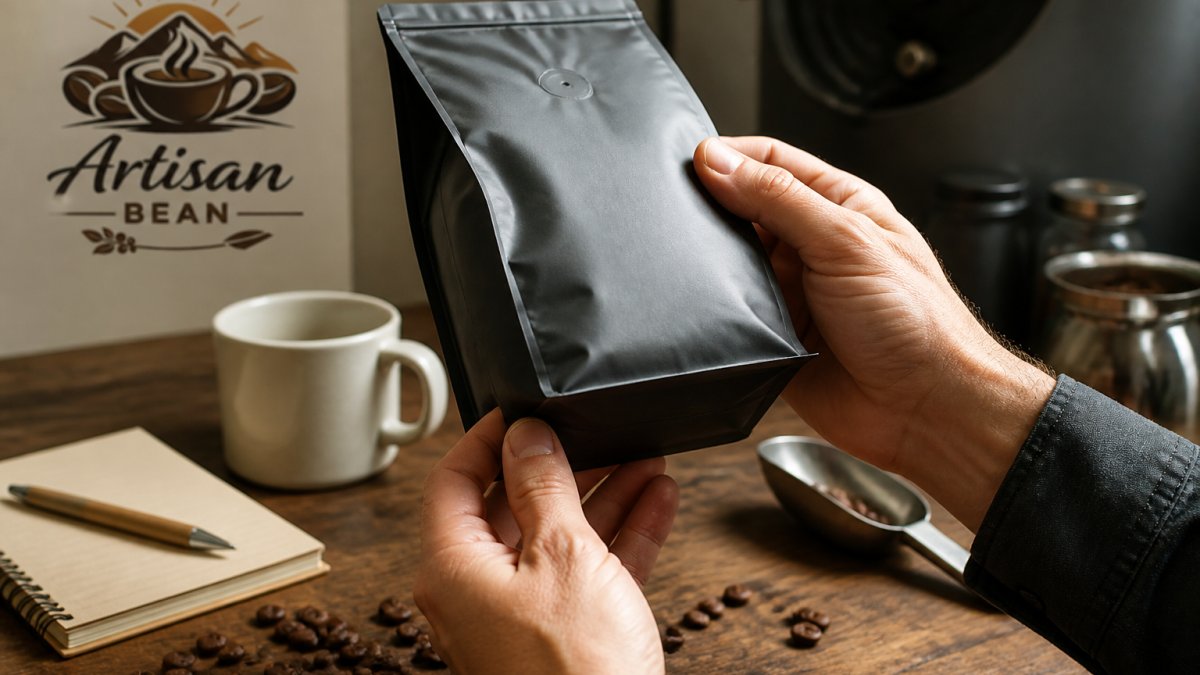
What to Do When a Bag Has No Roast Date
No roast date is a real answer, even if it's an unhelpful one. Treat it as a signal.
- Buy from a roaster who prints dates, not one who hides them
- If you must buy blind, choose the bag at the back of the shelf
- Smell the bag: a strong, sweet aroma suggests recent roasting
How Long Coffee Beans Stay Fresh After Roasting
Roasted coffee beans stay at their best for roughly two to six weeks after roasting, depending on the bean, the roast level, and how you store it.
The clock starts at the roaster, not at your kitchen. That's why shipping speed matters.
Freshness isn't a light switch; it's a slope. The coffee is vibrant in the first days, rounded and sweet in the middle weeks, and flat after that.
The Freshness Valve on Coffee Bags and Other Packaging Clues
The freshness valve on coffee bags is a one-way vent that lets carbon dioxide escape after roasting while keeping oxygen out. Oxygen is the real enemy here, and the valve is a quiet piece of engineering that protects your beans. But it's only one clue: packaging and storage together tell you how well the roast date has been protected, which is often more useful than the date alone.
What the Valve Actually Does
Freshly roasted beans release carbon dioxide for days. If that gas cannot escape, it builds pressure inside the bag, so the valve lets CO2 out while blocking outside air. That matters because oxygen accelerates staling by oxidizing the aromatic compounds that make coffee taste sweet and bright. A working valve is a sign the roaster understands degassing.
Packaging Clues That Affect Freshness After Roasting
Packaging tells you a lot if you know what to look for:
- A working valve signals a roaster who understands degassing
- A sealed, foil-lined bag blocks light and air better than paper
- A resealable zip helps once the bag is open
None of these clues proves freshness on its own. Together, they help you judge whether the printed date is plausible.
Storage Clues: How the Bag Was Kept Matters as Much as the Date
A roast date tells you when the clock started. Storage tells you how fast it has run. The same beans kept in different conditions age at different rates.
- Whole beans hold freshness longer than pre-ground coffee because less surface area is exposed to oxygen
- Sealed bags slow staling compared with bags left open or folded loosely
- Cool, dark, dry storage slows flavor loss; heat, light, and moisture accelerate it
A bag with a recent roast date but poor storage can taste older than a slightly older bag that was kept sealed and cool. That is why the date is a starting point, not the whole answer.
How to Judge Freshness Beyond the Printed Date
When the date is unclear or missing, use the bag itself as evidence. A strong, sweet aroma suggests recent roasting; beans that look dry and dull, or smell flat and papery, are likely past their best window. A working valve, a tight seal, and a clear date together give you reasonable confidence, if any one is missing, ask the seller before you buy.
Rest Windows by Brew Method and Roast Style
Resting coffee after roasting is the step most people skip. Beans need a few days to degas before they brew well. Brew too soon and the carbon dioxide fights your extraction.
Here's how we'd plan rest windows by brew method:
| Brew Method | Suggested Rest | Why It Helps |
|---|---|---|
| Espresso | 7-14 days | Degassing settles, extraction stabilizes |
| Filter coffee | 3-7 days | Clarity and sweetness come forward |
| French press | 5-10 days | Fewer harsh, gassy notes |
| Cold brew | 7-14 days | Smoother concentrate, less bitterness |
| Pour-over | 4-10 days | Cleaner flavor separation |
Roast style shifts these windows. Light roasts often need a little more rest to open up. Dark roasts tend to peak sooner and fade faster. Whole beans hold their freshness longer than pre-ground, so grind just before you brew.
Conclusion
The hardest part of buying fresh coffee is trusting a date you can't always see clearly.
That's the problem we built Artisan Bean to solve. We roast in micro-batches to order, ship right after roasting, and guarantee freshness by getting beans to you fast.
Join Our Coffee Club and taste what a genuinely fresh roast does to your morning ritual.
Frequently Asked Questions
Where is the roast date usually printed on a coffee bag?
Most roasters stamp or print the roast date on the bottom of the bag, near the seam, or on the back panel next to the valve. Some use a small sticker applied after roasting. Look for a date that sits alone, often preceded by 'Roasted on' or a batch number. If you only see one date and it is months in the future, that is a best-by date, not a roast date. Checking the bottom seam first saves time.
What is the difference between a roast date and a best-by date?
A roast date tells you when the beans left the roaster. A best-by date is the roaster's estimate of when the coffee will still be acceptable, often set 6 to 12 months after roasting. The roast date is the one that matters for flavor. Coffee is at its best in the first few weeks after roasting, so a bag with a best-by date 10 months out could already be 8 months old. Always look for the roast date first.
Can you tell when coffee was roasted if the bag only has a best-by date?
Not precisely. A best-by date is usually set months after roasting, so you can only estimate backwards. Some roasters use a fixed window, such as 12 months, which means a bag with a best-by date of June was likely roasted the previous June. That estimate is rough and depends on the roaster's labeling policy. If a bag has no roast date at all, treat it as a freshness risk and ask the roaster directly.
Does a freshness valve on coffee bags mean the beans are fresh?
No. The one-way freshness valve on coffee bags lets carbon dioxide escape after roasting so the bag does not balloon, but it does not prove freshness. A bag roasted 8 months ago still has a valve. What the valve does tell you is that the roaster packaged with degassing in mind, which is a good sign. Pair that clue with a clear roast date and you have a much better picture of how fresh the coffee really is.