

Is Small Batch Roasted Coffee Actually Worth It?
Last Updated: October 26, 2026
Quick Summary
Small batch roasted coffee is worth it because it is roasted in limited quantities under close human supervision, giving each lot attention to heat, airflow and timing. At Artisan Bean, we roast micro-batches to order and ship right after roasting, so you get a roast date days old instead of weeks.
- Small batch is not a regulated term, so the only proof is the roast date and how fast the coffee ships.
- Look for a printed roast date within the last 2 to 4 weeks and packaging with a one-way degassing valve.
- All five Artisan Bean single origins are listed at $22.99 per bag.
- Match roast level to brew method: medium-dark for espresso and milk, medium-light for pour-over and filter.
- Order only what you will drink in a few weeks, since buying five bags at once defeats the purpose.
Table of Contents
- What Small Batch Roasted Coffee Actually Means
- Why Fresh Roasted Coffee Beats the Grocery Store Bag
- Coffee Roasted to Order: What the Roast Date Tells You
- Micro-Batch Coffee vs Small-Batch: What's the Difference?
- The Best Small-Batch Coffee Brands to Consider
- How to Choose a Small-Batch Coffee: A Criteria-Based Comparison
- Join the Artisan Bean Coffee Club
- Frequently Asked Questions
What Small Batch Roasted Coffee Actually Means
Small batch roasted coffee is coffee roasted in limited quantities, typically under close human supervision, so each lot gets individual attention to heat, airflow and timing rather than running through a continuous high-volume line. At Artisan Bean, we roast in micro-batches, on order, and ship right after.
The difference is control. A medium-dark like our Bali Blue has dark chocolate and molasses notes, while a medium-light like Tanzania has pear, floral and jasmine notes.
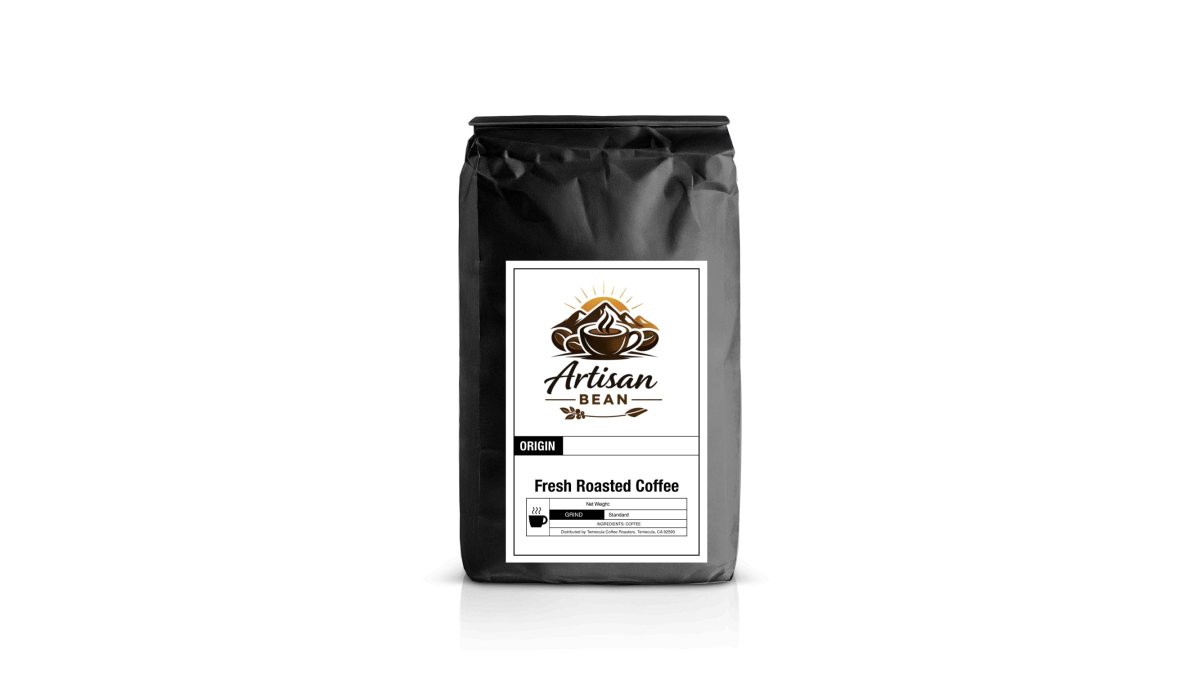
Here's the part most guides skip: "small batch" is not a regulated term. Any roaster can print it on a bag. What you're actually buying is a production method, and the only proof is the roast date and how fast the coffee ships. How to verify coffee roast dates walks through checking that a printed date is real. The Specialty Coffee Association's roasting guidance treats roast profiling and freshness as core quality variables, not marketing language.

Why Fresh Roasted Coffee Beats the Grocery Store Bag
Artisan Bean roasts micro-batch coffee to order and ships it directly to your door. Fresh roasted vs grocery store coffee sets the two side by side.
Artisan Bean roasts in micro-batches to order and ships right after roasting.
| Check | What good looks like | What to avoid |
|---|---|---|
| Roast date | Printed clearly, within the last 2-4 weeks | No date, or only a "best by" date |
| Packaging | One-way degassing valve, opaque or foil-lined | Clear bag with no valve, or a simple paper sack |
| Aroma on opening | Sweet, layered, varietal-specific | Flat, papery, or faintly rancid |
| Bean surface | Even color, minimal surface oil unless dark-roasted | Patchy color or heavy oil on a medium roast |
| Storage guidance | Whole bean, cool, dark, airtight | Pre-ground, open bin, or fridge storage |
Coffee Roasted to Order: What the Roast Date Tells You
Artisan Bean roasts its micro-batch coffee to order and ships it right after roasting.
We ship immediately after roasting.
Micro-Batch Coffee vs Small-Batch: What's the Difference?
Our Ethiopia Natural lists smallholder farmers in the Sidama zone, indigenous heirloom cultivars, an altitude of 1,700 to 1,900 metres, and a full natural process dried on raised beds. Benefits of micro batch coffee roasting explains what the micro-batch method involves.
The Best Small-Batch Coffee Brands to Consider
Below are five single-origin coffees, each listed at $22.99, with distinct roast profiles and flavor notes.
| Coffee | Roast Level | Flavor Notes | Origin & Altitude | Best For |
|---|---|---|---|---|
| Bali Blue | Medium-dark | Dark chocolate, molasses, brown sugar | Kintamani, Bali, 1,200-1,600 m | Rich, smooth daily cups |
| Brazil Santos | Medium | Cocoa, elegant and smooth | Parana and Sao Paulo, 750-1,050 m | Espresso and milk drinks |
| Ethiopia Natural | Medium-light | Milk chocolate, fruity, caramel | Sidama, Ethiopia, 1,700-1,900 m | Bright, fruit-forward pour-over |
| Guatemala | Medium | Dark chocolate, bright fruit, butterscotch | Antigua, 1,200-1,616 m | Balanced all-rounder |
| Tanzania | Medium-light | Pear, floral, jasmine, strawberry | Mbeya, Tanzania, 1,200-1,900 m | Delicate floral brews |
Bali Blue is our pick for anyone moving off grocery coffee. Hand-picked, wet-hulled and dried on raised beds in volcanic loam, it delivers dark chocolate and brown sugar without acidity that surprises.
Brazil Santos comes from Fazenda Santa Barbara and is pulped natural, sun-dried. It's the one we reach for when pulling espresso; the cocoa notes hold up under milk.
Ethiopia Natural is the fruit-forward choice, full natural and hand-sorted. Guatemala is the balanced middle ground, fully washed and sun-dried in Antigua. Tanzania is the delicate one, floral and bright, best brewed as pour-over.
Watch out: buying five bags at once defeats the purpose. Order what you'll drink in a few weeks.
How to Choose a Small-Batch Coffee: A Criteria-Based Comparison
- Roast date printed and recent? No date means no proof of freshness.
- Roast level matches your brew method? Medium-dark for espresso and milk; medium-light for pour-over and filter.
- Origin named down to region or farm? "Bali" is vague; "Kintamani, Bali, 1,200-1,600 m" is traceable.
- Processing method stated? Washed coffees read cleaner; natural coffees read fruitier.
- Shipping happens after roasting? If beans sit in a warehouse first, freshness is gone.
On price, all five of our single origins sit at $22.99 per bag. That's higher than a supermarket bag, and we won't pretend otherwise. What you're paying for is a roast date days old instead of weeks, plus origin detail you can verify. Fair Trade USA's sourcing standards explain why farm-level traceability costs more to maintain.
Join the Artisan Bean Coffee Club
Join the Artisan Bean Coffee Club.
You can browse the coffee club options and see how ordering works before committing. If you're the type who runs out and panic-buys at the supermarket, set a frequency slightly ahead of your actual consumption.
Frequently Asked Questions
What does small-batch roasted coffee mean?
Artisan Bean roasts micro-batch coffee to order and ships it right after roasting.
Is small-batch coffee fresher than grocery-store coffee?
Artisan Bean roasts micro-batch coffee to order and ships it immediately after roasting.
How do I choose a small-batch coffee roaster?
Artisan Bean's product listings provide origin, altitude, process, roast, and tasting-profile details for its coffees.
How soon should you drink coffee after it is roasted?
Most coffees taste best between roughly 5 and 21 days after the roast date. In the first few days, beans release carbon dioxide, which can make brews taste flat; after about three weeks, the aromatics fade and staleness sets in. Whole beans keep far better than pre-ground, so grind just before brewing. Buying smaller bags more often keeps you inside that window rather than working through a large bag that goes stale.
Does small-batch roasting make coffee taste better?
Artisan Bean's Bali Blue has dark chocolate and molasses notes, while Tanzania has pear and jasmine notes.
The challenge with small-batch coffee is simple: most bags don't prove their freshness, and most subscriptions ship from stock. Artisan Bean roasts in micro-batches to order, prints the roast date, and ships immediately after roasting, so the bag you open smells like the roaster intended. Pick a single origin, set your frequency, and let the ritual start. Get started with Artisan Bean and taste what a days-old roast actually does to your morning cup.
